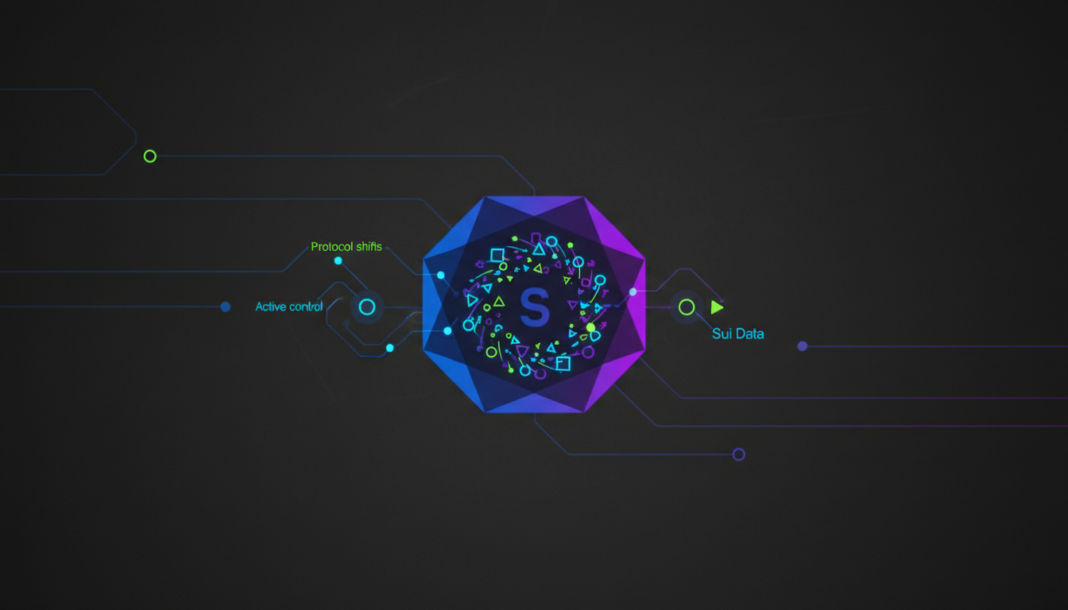

The on-chain behavior of major crypto treasury holders is shifting from a passive strategy to active protocol participation, according to data from the Sui network. Foundation-controlled wallets hold approximately 110 million SUI, about 3% of the circulating supply, while on-chain analytics show increasing concentration among top wallets. This activity now includes governance participation and yield generation, marking a move where “treasuries are starting to run the protocols instead of just holding assets.”
Crypto treasuries are evolving from passive balance sheets into active protocol participants, and Sui illustrates this shift. Historically, firms like Strategy and Metaplanet treated crypto as static reserves, but deployment now matters.
On Sui, foundation-controlled wallets remain the largest holders, with treasury wallets tracked on Explorer holding a concentrated 108 million SUI position. On-chain analytics also reveal rising holder concentration among top wallets.
This situation goes beyond affecting prices and providing liquidity. It involves participating in governance and earning returns, indicating a fundamental change in treasury function.
Sui’s circulating supply reached approximately 3.79 billion SUI by late January 2026, which is 38% of the 10 billion max supply. Unlocks have followed a predefined vesting curve without abnormal spike events.
According to the token and schedule data, the Sui Foundation and Mysten Labs still control sizable allocations. Long-term development, staking incentives, and ecosystem funding largely lock in the supply.
Sui’s treasury retention mirrors Solana-style ecosystem bootstrapping rather than Bitcoin-style scarcity. According to CoinGecko data, the institution now holds over 110 million SUI.
Stablecoin adoption on Sui reinforces this structural shift, with its market cap reaching roughly $500 million by late January 2026. USDC controls over 70% of this liquidity, which powers DeFi protocols.
Treasury-linked entities now deploy capital through stablecoins to deepen liquidity and generate fees. As a result, treasuries have begun operating within the Sui economy.
Yield dynamics on Sui DeFi have strengthened steadily, reflecting deeper liquidity. In late January 2026, yields range from 3–10% on low-risk strategies to over 50% on incentive-heavy pools.
Lending protocols like the NAVI Protocol and Suilend deliver between 5% and 7% APY on USDC. DEXs like Cetus push for over 70% APY through fees.
Sui’s treasury behavior signals a transition from balance-sheet optionality to protocol control, where ownership increasingly translates into economic and governance influence. The convergence of stablecoin expansion and yield dispersion allows treasuries to monetize participation without relying on spot market exits.