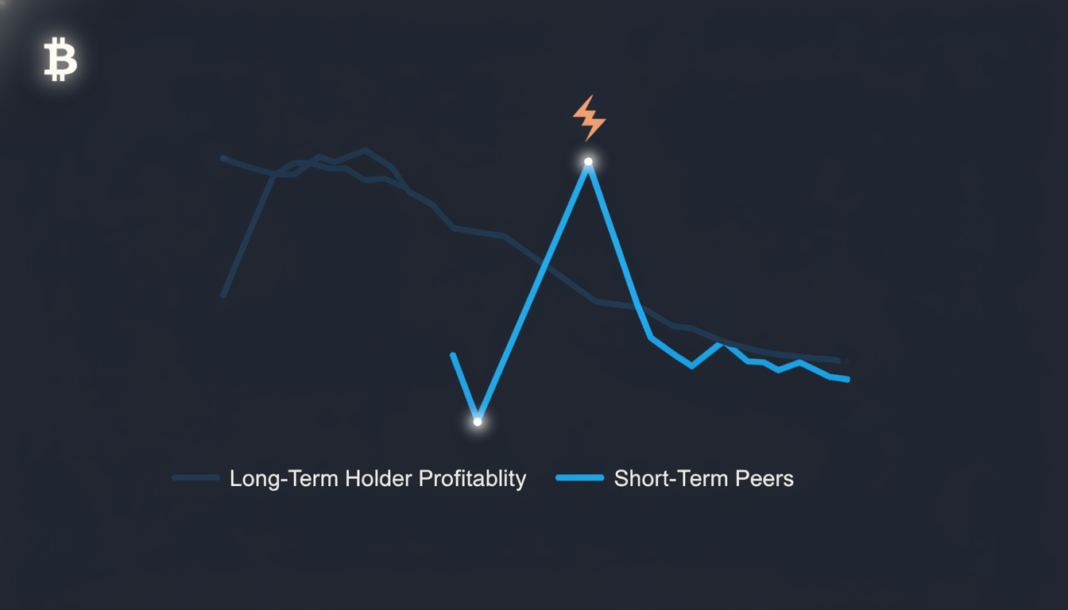

Bitcoin’s recent price recovery to over $71,000 has not established a durable bullish structure, according to on-chain analysis. Long-term holders are currently less profitable than short-term holders, a bearish signal, though data indicates these veteran investors are not yet selling their holdings.
Bitcoin has not formed a sustained bullish trend since its drop to $62,000 in February. Despite trading 15.8% higher at $71,800, the asset remains significantly below its all-time high, leaving it vulnerable to renewed selling pressure.
Market structure indicators suggest Bitcoin remains in a broader bearish phase. This assessment is supported by the Long-term Holder to Short-term Holder Spent Output Profit Ratio, which currently shows short-term holders are more profitable than long-term holders.
When long-term holder profitability contracts, selling pressure can increase as investors attempt to preserve remaining gains. Long-term holders are defined as addresses holding Bitcoin for more than 155 days, while short-term holders have held for 155 days or less.
Despite declining relative profitability, long-term holders remain largely inactive. On-chain data shows no significant increase in distribution from this cohort, suggesting conviction remains intact.
Binary Coin Days Destroyed supports this view, indicating older coins are not being moved. This behavior aligns with a gradual rise in Net Unrealized Profit/Loss, which has increased to 0.21.
At press time, Bitcoin dominance sat at 58%, reflecting its share of total crypto market capitalization. This level suggests a balance between supply and demand, which has helped keep prices relatively stable.
However, data shows approximately $1.12 trillion has been wiped from Bitcoin’s market capitalization since its peak. Without a gradual return of capital at this scale, the price is likely to remain constrained near the lower end of its current range.