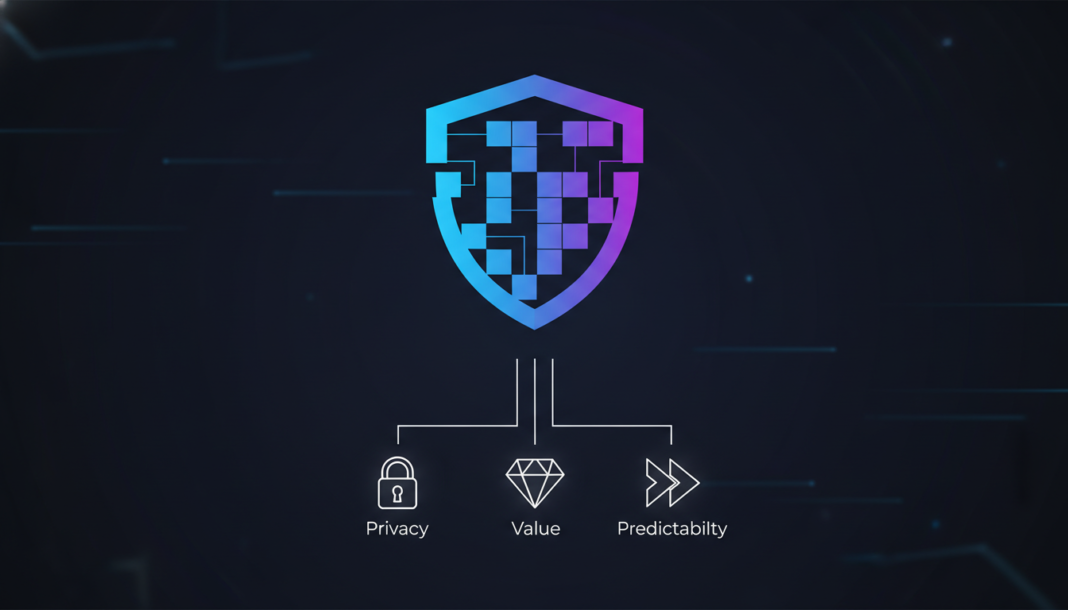

The recent cryptocurrency market sell-off is accelerating institutional migration toward blockchains that provide concrete value, privacy, and predictable costs, according to industry analysis. Digital Asset co-founder and CEO Yuval Rooz stated this repricing is exposing ’empty shell’ tokens. Institutions like Depository Trust & Clearing Corporation and Euroclear demand privacy, interoperability without bridges, and cost certainty, requirements many public chains cannot meet simultaneously. Meanwhile, major asset managers like BlackRock and Franklin Templeton are progressing with tokenization on public networks, highlighting a bifurcated market evolution.
Yuval Rooz, co-founder and CEO of Digital Asset, said the market sell-off is repricing ’empty shell’ tokens. He indicated this is driving institutions toward blockchains offering real value, privacy, and predictability.
Rooz emphasized that architectural design and token economics now critically differentiate chains for institutions. Chains reliant on bridges face scrutiny due to security vulnerabilities and their role in obscuring transaction flows.
Bridges lock assets on one network to mint equivalent tokens on another, making them prime hacker targets. A report by Elliptic suggested that $21.8 billion of illicit or high-risk crypto flowed through decentralized exchanges, cross-chain bridges, and swap services in 2025.
Major institutional clients require privacy, interoperability without bridges, and predictable transaction costs. Rooz maintains general-purpose public chains currently cannot provide all three features at once.
Conversely, large asset managers are actively tokenizing products on public networks like Ethereum. Examples include BlackRock’s BUIDL fund and Franklin Templeton’s BENJI tokens, which represent interests in a U.S. government money market fund.
The industry’s maturation shows institutions prioritizing value, privacy, and predictability. Significant obstacles remain, but blockchains meeting these demands may lead to wider institutional adoption.