

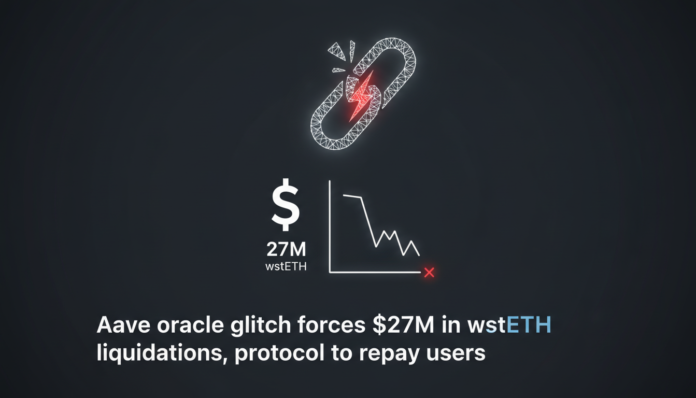
A configuration error in a risk-oracle system used by the Aave lending protocol triggered the liquidation of approximately $27 million in user positions. The incident, involving wrapped staked Ether, was caused by an exchange rate miscalculation and resulted in liquidators capturing nearly $700,000 in bonuses. Aave has stated no bad debt was incurred and plans to use recaptured funds and its treasury to compensate affected users.
A configuration error in a risk-oracle system used by crypto lending platform Aave triggered the liquidation of about $27 million in wrapped staked Ether (wstETH) positions. The protocol is now moving to compensate the affected users.
In a post-mortem published Tuesday, Aave said about 10,938 wstETH worth approximately $27.1 million was liquidated. The protocol had applied an exchange rate that was 2.85% below the live market rate for wstETH and Lido staked Ether.
The issue stemmed from a misalignment between a snapshot ratio and a snapshot timestamp in the Capo risk-oracle configuration. This caused the system to calculate a maximum allowed exchange rate below the actual onchain rate.
Aave founder and CEO Stani Kulechov stated, “A technical misconfiguration resulted in the liquidation of positions that were already close to their liquidation thresholds.” He confirmed the configuration issue has been remediated and the protocol incurred no bad debt.
Liquidators captured about 499 Ether in bonuses and value tied to the pricing deviation. Kulechov noted a total of 345 Ether, worth around $700,000, went to liquidators as an excess liquidation windfall.
Aave said it recaptured 141 ETH in liquidation bonus revenue through BuilderNet refunds and another 13 ETH in liquidation fees. These funds will be used to compensate impacted users, with any shortfall covered by the DAO treasury.
The incident adds to broader scrutiny of collateral pricing and oracle-related risk controls across decentralized finance lending markets. It also occurs during a period of internal tension following the Aave Chan Initiative‘s decision not to renew its engagement with the DAO.

