

Your threat model is broken.
- You searched for the best bitcoin offshore hosting provider.
- You found one that “accepts Bitcoin.”
- You paid.
- You felt safe.
- You forgot one thing.
- That host required your full name, email, and government ID during signup.
Now your payment is anonymous, but your identity sits in a database in Virginia, subject to US subpoenas, Five Eyes intelligence sharing, and a Terms of Service that allows immediate suspension on any copyright complaint.
This is the Hostinger Trap.
Dozens of mainstream providers now accept crypto payments, but crypto alone does not create anonymity.
A Bitcoin payment to a host that runs KYC checks is pointless when your identity already sits in their database.
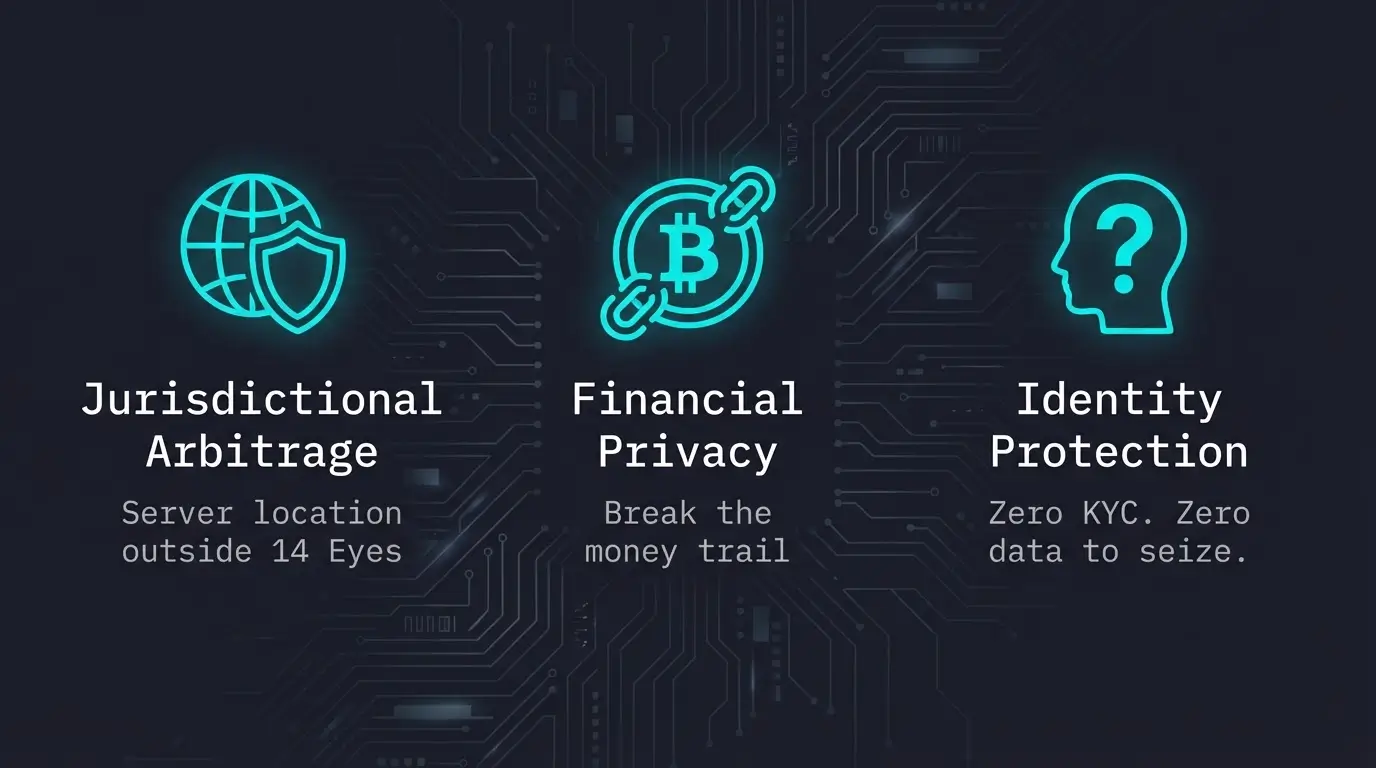
Real sovereignty over your infrastructure requires three pillars working together.
If any one of these three pillars is missing, your anonymity has a hole in it. And holes get exploited.
Methodology. How We Vetted These Providers
You should know exactly how we built this list. Every provider went through a five-point filter.
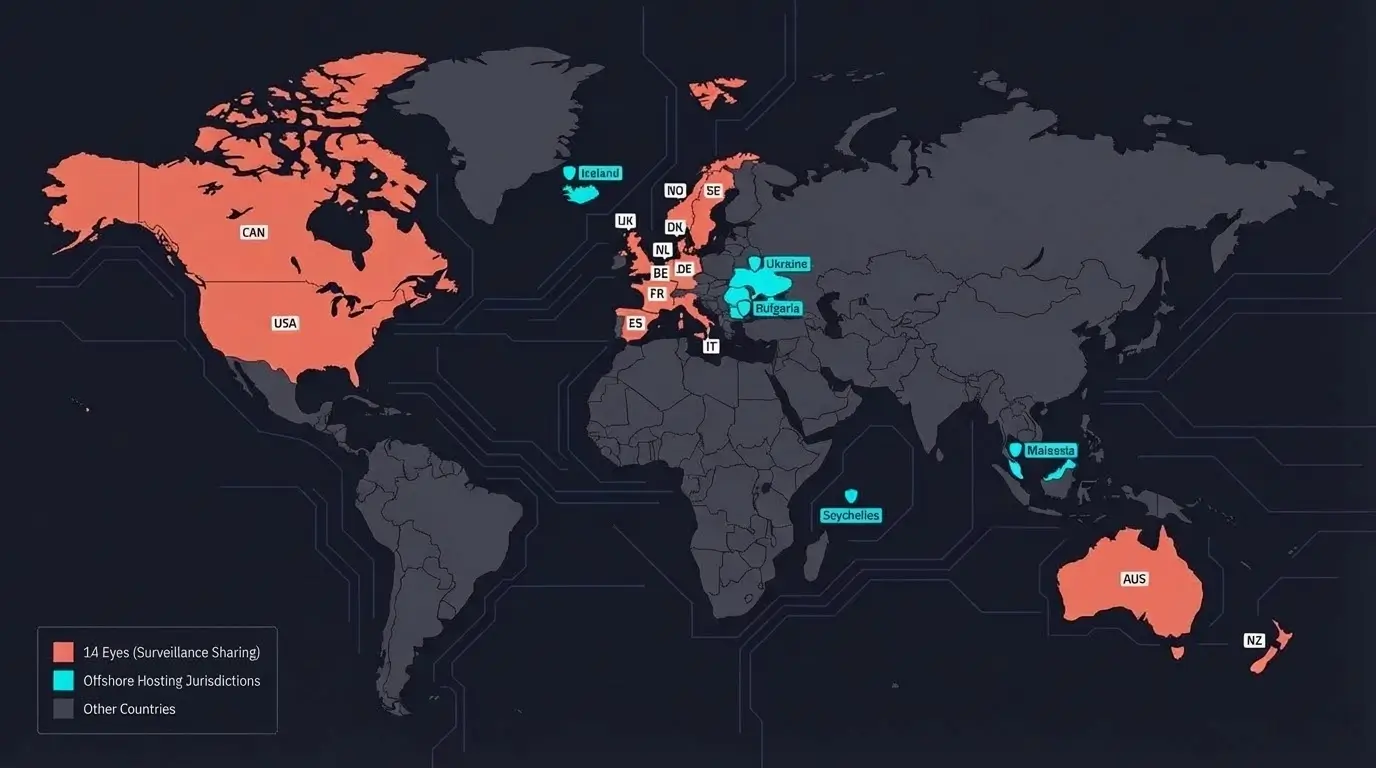
- Jurisdiction Check. We rejected any host based exclusively in the US, UK, or any Five Eyes country. The remaining providers were evaluated based on whether their host country has strong data protection laws, low cooperation with foreign intelligence agencies, or both.
Malaysia, Iceland, Seychelles, Ukraine, and Bulgaria cleared this filter. The Netherlands is a borderline case. It sits inside the 14 Eyes but has some of Europe’s strongest privacy precedents under Dutch civil law. We flagged this trade-off explicitly for each Dutch-based provider.
- Payment Processing. We prioritized hosts that accept direct wallet-to-wallet crypto transfers. Several providers use third-party gateways like BitPay or CoinGate, which may collect IP addresses or require identity verification.
We flagged those as partial-privacy solutions. Providers accepting Monero (XMR) received additional credit because Monero transactions are private by default, unlike Bitcoin’s transparent blockchain [2].
- Hardware Ownership. A hosting company that owns its own servers, network equipment, and IP ranges has a massive advantage.
If a host merely resells capacity from a larger upstream provider (like OVH or Hetzner), that upstream provider can cut them off on a single abuse report.
We favored hosts with their own autonomous system numbers (ASNs), colocation agreements, or physical data center ownership.
- The DMCA Test. We analyzed each provider’s Terms of Service and public statements on copyright complaints. There is a spectrum here.
Some providers forward DMCA complaints to clients as a “courtesy notification” with no action required. Others immediately suspend the account.
The best providers require a court order from their LOCAL jurisdiction before taking any action, which makes US-originated DMCA requests effectively meaningless.
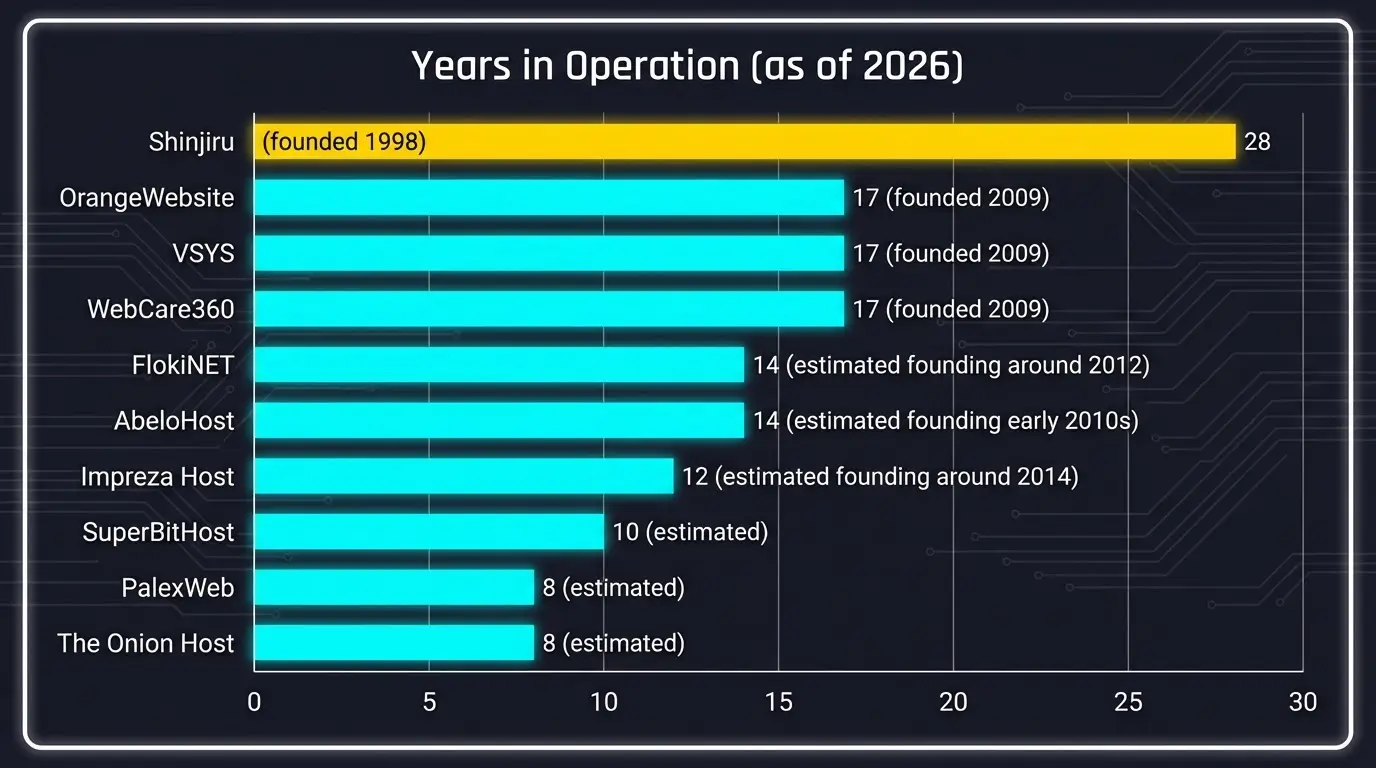
- Age and Reputation. We excluded any provider with less than 3 years of operation history. Fly-by-night hosts pop up constantly in the offshore space.
A host that has survived years of abuse complaints, legal pressure, and market changes without folding has demonstrated real operational resilience.
Top 10 Best Bitcoin Offshore Hosting Providers (Reviewed)
| Provider | Jurisdiction | Bitcoin | Monero | No KYC | DMCA Policy | Best For |
|---|---|---|---|---|---|---|
| Shinjiru | Malaysia | Yes | No | Yes | Investigates; defends | High-risk, long-term |
Impreza Host | Seychelles | Yes | Yes | Yes | Ignores | Tor/.onion projects |
| PalexWeb | Netherlands/Russia | Yes | No | Yes | Ignores aggressively | Grey-area content |
| FlokiNET | Iceland/Romania/Finland | Yes | Yes | Yes | Requires local court order | Journalism, activism |
| OrangeWebsite | Iceland | Yes | No | Yes | Protected by IMMI | Publishing, free speech hosting |
| VSYS | Ukraine/Netherlands | Yes | Yes | Yes | Ignores US DMCA | High-bandwidth, streaming |
| AbeloHost | Netherlands | Yes | No | Yes | Case-by-case | Business sites |
| WebCare360 | Multi-jurisdiction | Yes | Yes | Yes | Local legal process only | Speed-focused apps |
| SuperBitHost | Bulgaria | Yes | Yes | Yes | Lenient | Developers, temp projects |
| The Onion Host | Bulgaria/Netherlands | Yes | Varies | Yes | Moderate | Beginners, testing |
THE “BULLETPROOF” HEAVYWEIGHTS (Maximum Privacy)
1. Shinjiru (The Gold Standard)

- Jurisdiction. Malaysia (offshore).
Shinjiru has operated since 1998, making it one of the oldest offshore-focused hosting companies in existence [3].
Headquartered in Kuala Lumpur, the company holds ISO 9001:2008 certification, the only offshore web hosting provider to carry that accreditation [4].
They also received HostAdvice’s “Top 25 Offshore Hosting” award for 2026 [5].
Malaysia sits outside the 14 Eyes alliance entirely.
Their “Strongbolt” hosting tier is designed specifically for high-risk projects. It features anti-DDoS protection, domain privacy, and redundant infrastructure across 8 offshore locations [6].
No personal details are required at signup, and all plans accept direct Bitcoin payments with no third-party gateway.
“What if I get a DMCA complaint?”
Shinjiru investigates each complaint individually rather than auto-suspending. Their stated policy protects freedom of speech, and Malaysia’s geographic and legal distance from US courts makes enforcement of American civil copyright claims extremely difficult.
- Best for. High-risk projects that cannot afford downtime. Long-running operations that need a stable, proven partner.
- Pricing. Shared hosting from approximately $5/month. Dedicated servers from $59/month. All payable in BTC.
CHECK SHINJIRU’S HOSTING PLANS →
2. Impreza Host (The Tor Specialist)
- Jurisdiction. Seychelles.
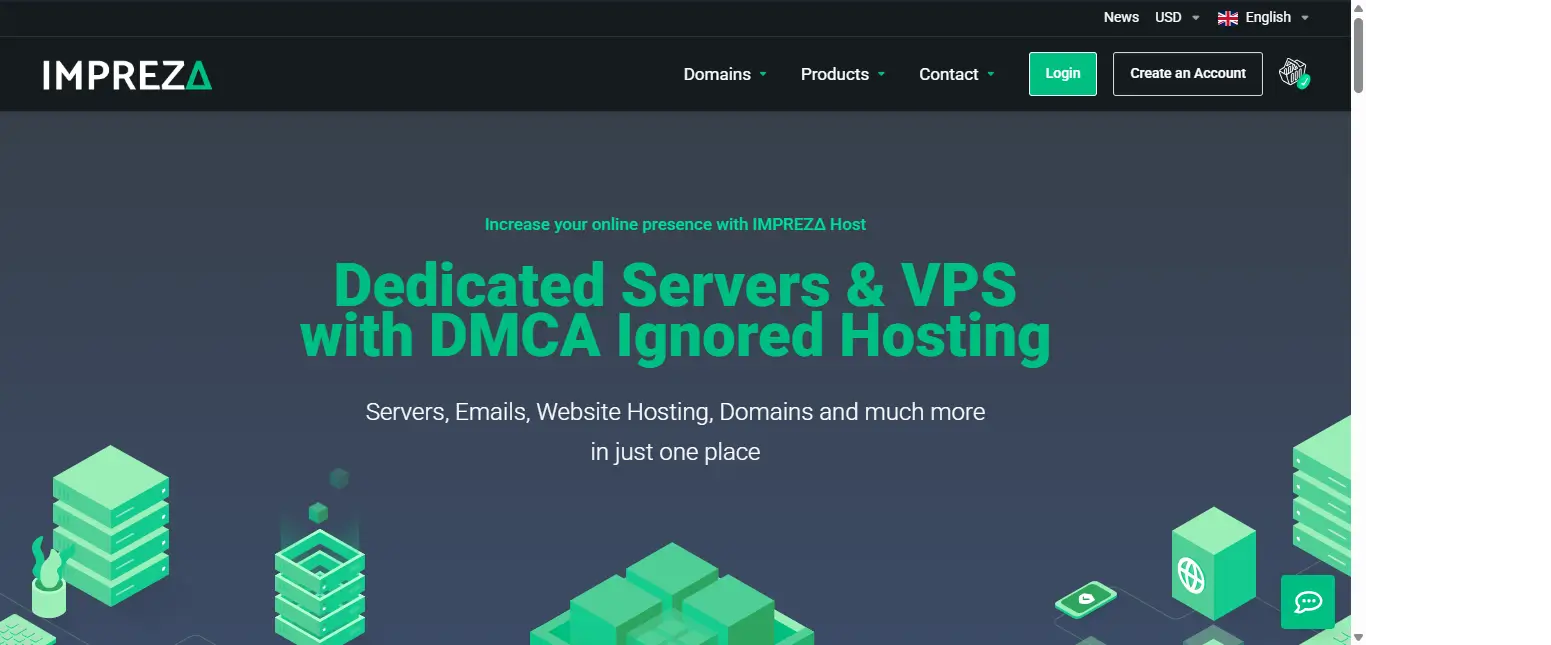
Impreza Host built its entire business around the Tor network. They offer dedicated .onion hosting, Tor-compatible VPS plans, and a full anonymous stack including Seychelles-registered domains [7].
The Seychelles has no data retention laws and does not cooperate with foreign intelligence requests in practice.
Impreza accepts Bitcoin, Monero, and several other cryptocurrencies directly.
- No KYC.
- No identity verification.
Their onboarding process is built for users who access the signup page through Tor Browser itself.
The trade-off is cost. Impreza’s pricing sits higher than most competitors, with Tor VPS plans starting around $30/month for 1 vCPU and 1GB RAM [8]. You pay a premium for the specialization.
- Best for: Projects built specifically for the Tor network. .onion sites, Tor hidden services, and extreme anonymity requirements.
CHECK IMPREZA HOST’S HOSTING PLANS →
3. PalexWeb (The Aggressive Option)
- Jurisdiction. Netherlands / Russia.
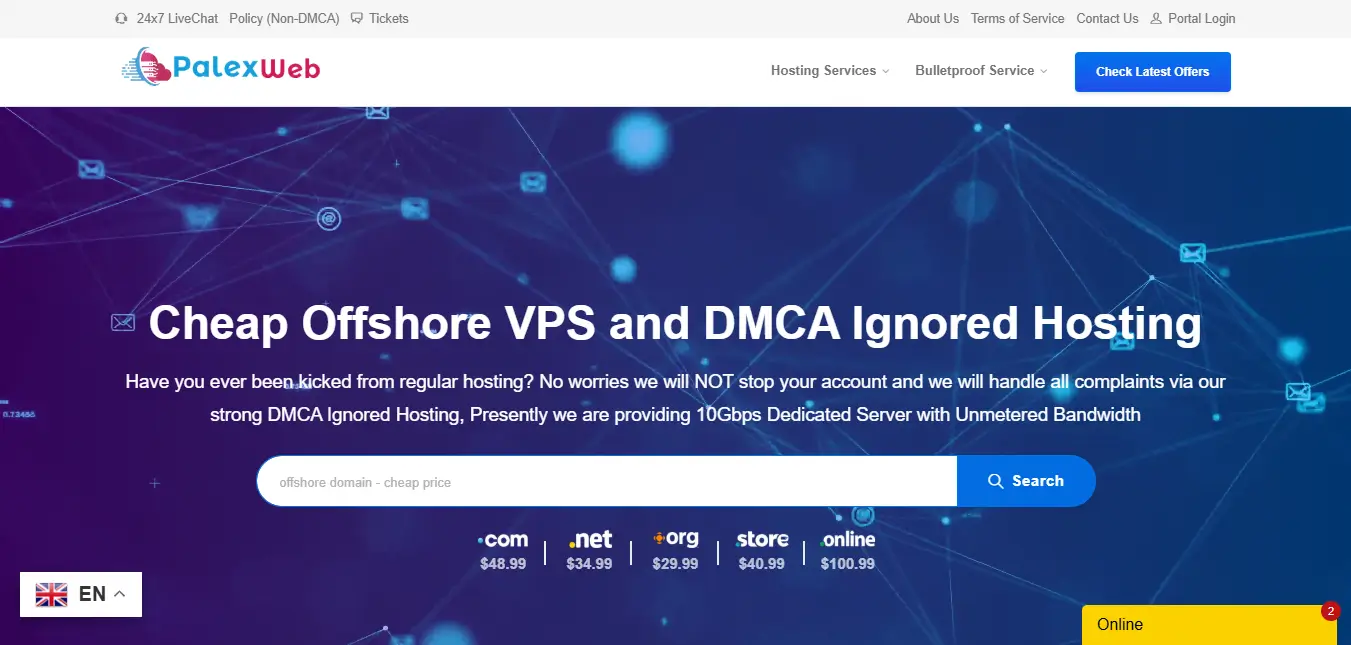
PalexWeb openly markets bulletproof VPS hosting with a high tolerance for complaints [9]. Their infrastructure spans Netherlands and Russia-based data centers, giving clients options on jurisdiction.
The Russia option is notable. Russian data centers sit outside European and American legal frameworks entirely, and cooperation with Western law enforcement on civil matters is minimal.
The Netherlands option provides better network speeds to European audiences but carries 14 Eyes risk.
Is this risky? Yes.
PalexWeb’s aggressive stance means they attract a mixed clientele, and their IP ranges can carry reputation issues (covered in the Technical Challenges section). Use with clear eyes.
- Best for: Content that generates high volumes of complaints and needs a provider that will not fold under pressure.
CHECK PALEXWEB’S HOSTING PLANS →
THE “FREE SPEECH” SANCTUARIES (Journalism and Media)
4. FlokiNET (The Activist’s Choice)

- Jurisdiction: Iceland / Romania / Finland.
FlokiNET operates data centers in three privacy-friendly European jurisdictions [10].
- Iceland provides some of the strongest free speech protections on Earth (more on this below).
- Romania has minimal data retention requirements.
- Finland offers strong Nordic privacy laws combined with high-quality network infrastructure.
What separates FlokiNET from the competition is their legal department.
They actively defend clients against abuse complaints rather than simply forwarding them.
According to their privacy policy, client data requires a court order FROM the country where it is stored before any disclosure [11].
A US DMCA complaint cannot force action on a server in Reykjavik.
FlokiNET accepts Bitcoin, Monero, and even cash payments sent by physical post [12].
No KYC. No personal details required.
They also accept Litecoin, ZCash, Dash, Dogecoin, Ether, USDT, USDC, Solana, BNB, and more [13].
WHTop ranks them 3.4/10 based on 11 user reviews as of December 2025 [14], which reflects a small review sample more than service quality. Their niche audience does not typically leave public reviews.
- Best for. Whistleblowers, journalists, political bloggers, controversial publishers, and activist organizations.
CHECK FLOKINET’S HOSTING PLANS →
5. OrangeWebsite (The Icelandic Vault)

- Jurisdiction. Iceland.
OrangeWebsite runs exclusively on Icelandic soil, which means your data falls under the Icelandic Modern Media Initiative (IMMI).
The Icelandic parliament passed the IMMI resolution in 2010, with the explicit goal of making Iceland a global “safe haven” for freedom of expression, freedom of information, and source protection [15].
Freedom House’s 2024 report on Iceland’s internet freedom specifically cites IMMI as a foundational protection [16].
OrangeWebsite has operated since 2009 and accepts Bitcoin. Their infrastructure runs on geothermal and hydroelectric power, making them one of the few genuinely green hosting providers in the offshore space [17].
(Ed. note. OrangeWebsite has mixed reviews online. Some users on BitcoinTalk and Reddit report slow support response times. Others praise their reliability over multi-year periods. Do your own due diligence before committing.)
- Best for. Text-heavy publishing, independent journalism, political commentary, and any project that benefits from Iceland’s legal protections.
CHECK ORANGE WEBSITE’S HOSTING PLANS →
THE PERFORMANCE BEASTS (Speed + Privacy)
6. VSYS (Virtual Systems)
- Jurisdiction. Ukraine / Netherlands.
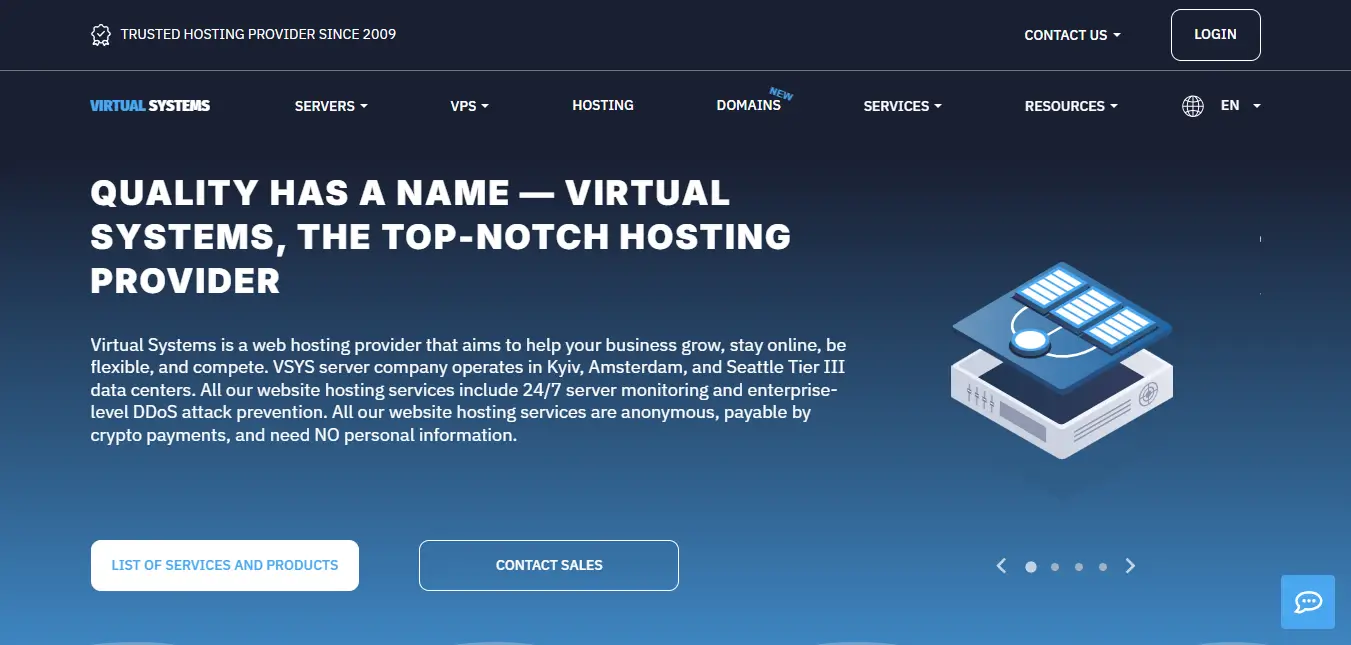
VSYS, founded in 2009 in Kyiv, Ukraine, owns its own autonomous system (AS6698 and AS30860), its own IP ranges, and holds certified LIR status from RIPE NCC [18].
This is a significant technical advantage. When a provider owns its network infrastructure end-to-end, no upstream carrier can unilaterally pull the plug.
Their server fleet spans Tier III data centers in Kyiv, Amsterdam, and Seattle [19].
- The Ukraine location provides offshore privacy benefits.
- The Netherlands location offers faster European peering.
- The Seattle location is unusual for an offshore provider and raises jurisdiction questions. Avoid it if your threat model involves US authorities.
VSYS accepts Bitcoin and other cryptocurrencies, requires no KYC, and their DMCA policy ignores US copyright claims [20]. WHTop rates them 9.4/10 based on 42 user reviews [21].
- Best for. High-bandwidth projects (streaming, media-heavy sites), operations that need serious network throughput with privacy.
7. AbeloHost (The Dutch Fortress)
- Jurisdiction. Netherlands.
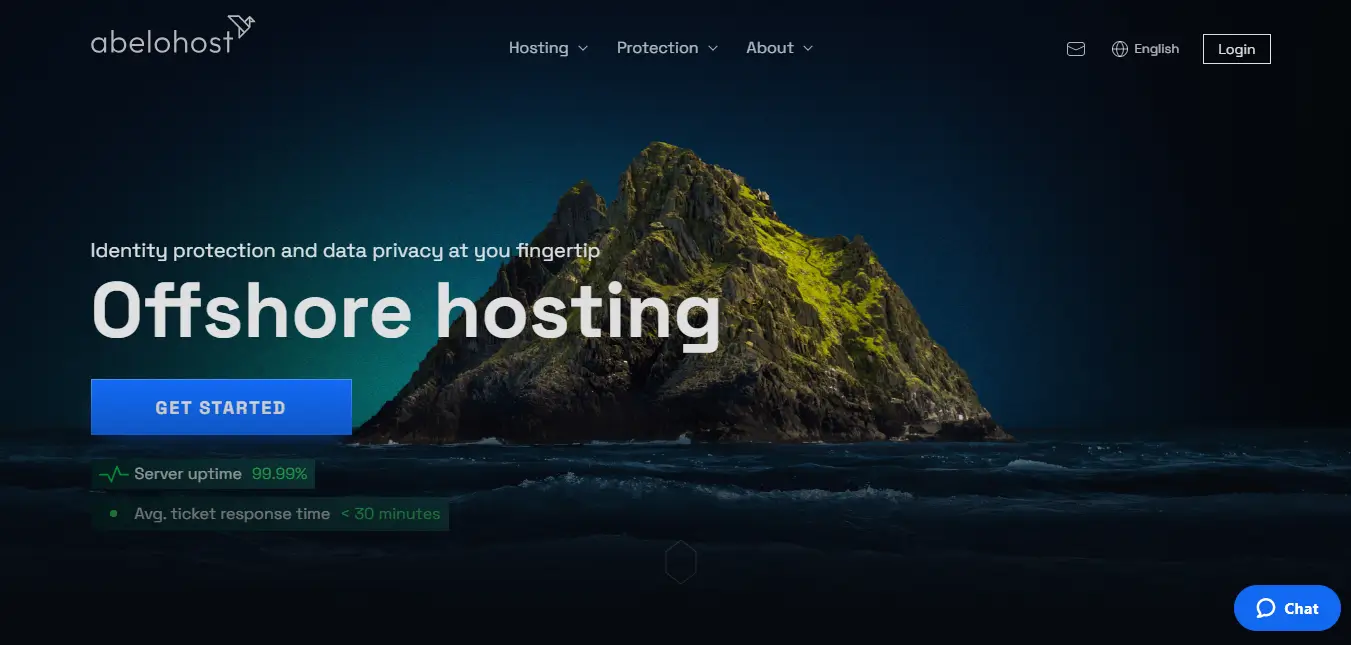
AbeloHost owns physical hardware in the Netherlands and has been operating since the early 2010s.
HostAdvice aggregates 256 user reviews with generally positive sentiment [22]. They accept Bitcoin payments and market themselves as DMCA-ignored hosting.
Keep in mind though that multiple reports on BlackHatWorld and Trustpilot indicate AbeloHost has suspended accounts on DMCA complaints despite their marketing [23]. Their definition of “DMCA ignored” may mean “we evaluate complaints case-by-case” rather than “we ignore all complaints.”
This distinction matters.
So why include them in this list? Because when they DO defend a client, they do it well.
Their Dutch data center infrastructure provides excellent connectivity (sub-10ms to major European exchanges), strong uptime, and responsive support.
For lower-risk content that occasionally attracts complaints, AbeloHost balances privacy and performance effectively.
- Best for. Business sites, e-commerce, and projects that need reliable Dutch infrastructure with a privacy layer. NOT recommended for content that generates heavy, sustained complaint volumes.
CHECK ABELOHOST’S HOSTING PLANS →
8. WebCare360 (The Speed King)

- Jurisdiction. Registered offshore; servers in Ukraine, Romania, Moldova, Netherlands, Sweden, Poland, and Russia [24].
WebCare360 has operated since 2009 and serves over 5,000 clients across 120 countries [25].
Their technical focus is performance, with NVMe SSD storage across all plans, multi-terabit network infrastructure, and 100Gbps uplinks.
They accept Bitcoin, Monero, Litecoin, USDT, Dash, and DOGE directly [26].
No personal information required. Their FAQ states explicitly that they “do not require personal information” and “support anonymous usage.”
The multi-jurisdiction approach gives you flexibility. You can choose server locations based on your specific latency and privacy needs.
- Ukraine and Moldova provide the strongest offshore protections.
- Netherlands and Sweden provide the fastest European connectivity.
- Pricing starts at EUR 5.49/month for shared hosting and EUR 24.99/month for VPS. Dedicated servers from EUR 89/month [27].
- Best for. Speed-sensitive applications, e-commerce, and operations that need NVMe performance with offshore privacy.
CHECK WEBCARE360’S HOSTING PLANS →
THE CRYPTO-NATIVES (Budget and Flexibility)
9. SuperBitHost (The Altcoin Friendly)
- Jurisdiction. Bulgaria.
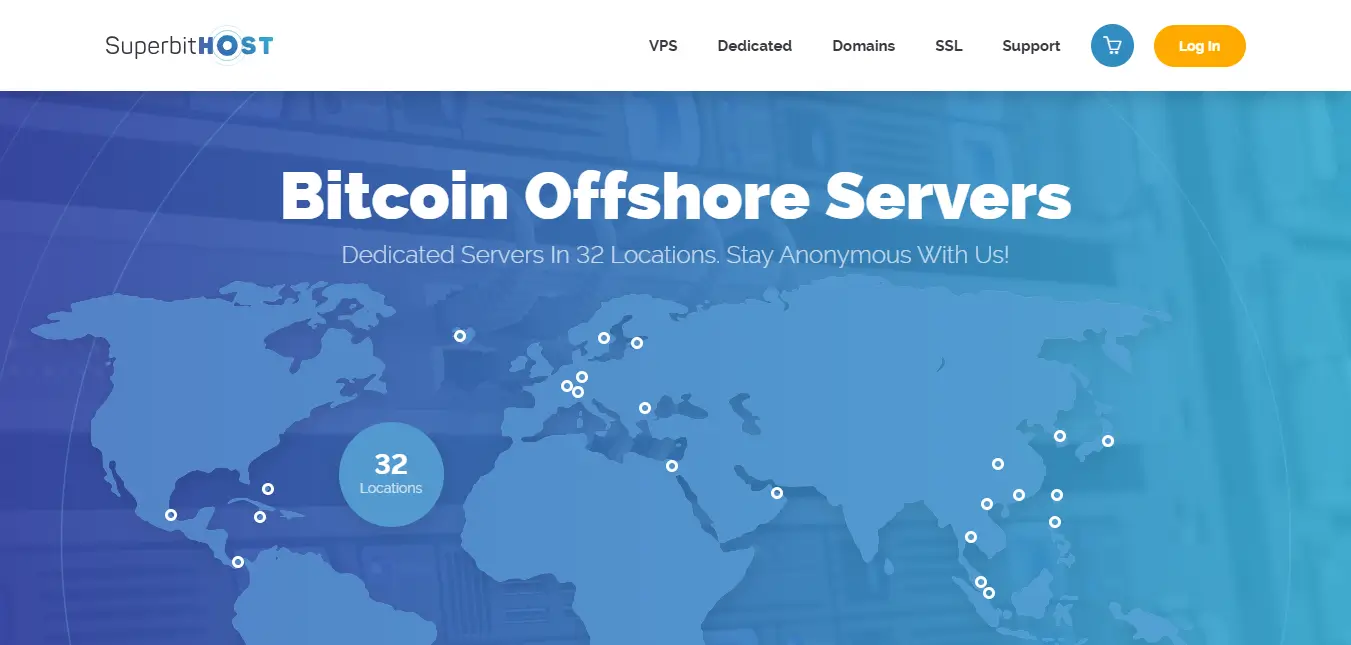
SuperBitHost accepts an unusually wide range of cryptocurrencies, including BTC, XMR, LTC, and others [28].
Bulgaria sits outside the 14 Eyes, and its data protection enforcement is relatively light compared to Western Europe.
Their VPS plans run from Bulgarian data centers and offer no-contract, month-to-month billing, which makes them practical for developers who need quick, disposable environments.
Need a test server for 30 days? Pay in Monero, use it, and walk away.
WHTop rates them 7.8/10 based on 5 user reviews [29]. The small review count reflects their niche market position rather than a red flag.
- Best for. Developers needing temporary, anonymous environments. Budget-conscious users who want crypto-native payment options without long contracts.
CHECK SUPERBITHOST’S HOSTING PLANS →
10. The Onion Host (The Entry Level)

- Jurisdiction. Bulgaria / Netherlands (and other EU locations) [30].
The Onion Host provides DMCA-ignored shared hosting, VPS, and dedicated servers with DDoS protection included.
HostAdvice aggregates 125 user reviews with generally positive feedback [31]. HotFrameworks ranked them eighth among DMCA-ignored hosting providers in January 2026 [32].
They accept cryptocurrency payments and operate from multiple EU jurisdictions. Their shared hosting plans include unmetered bandwidth, which is uncommon in the offshore space. 500 Gbps DDoS protection is bundled at no extra cost.
“Is this truly bulletproof?” Probably not.
The Onion Host is best understood as an affordable, privacy-oriented entry point. Their Terms of Service show they will act on legitimate legal orders from their host country’s courts.
This is NOT the provider for your highest-risk project. It IS the provider for testing anonymous hosting workflows before committing to a more expensive bulletproof solution.
- Best for. Beginners. Developers testing anonymous setups. Small projects with moderate risk profiles and tight budgets.
CHECK THE ONION HOST’S HOSTING PLANS →
Technical Challenges and Solutions
Offshore hosting introduces specific technical problems that you must solve upfront.
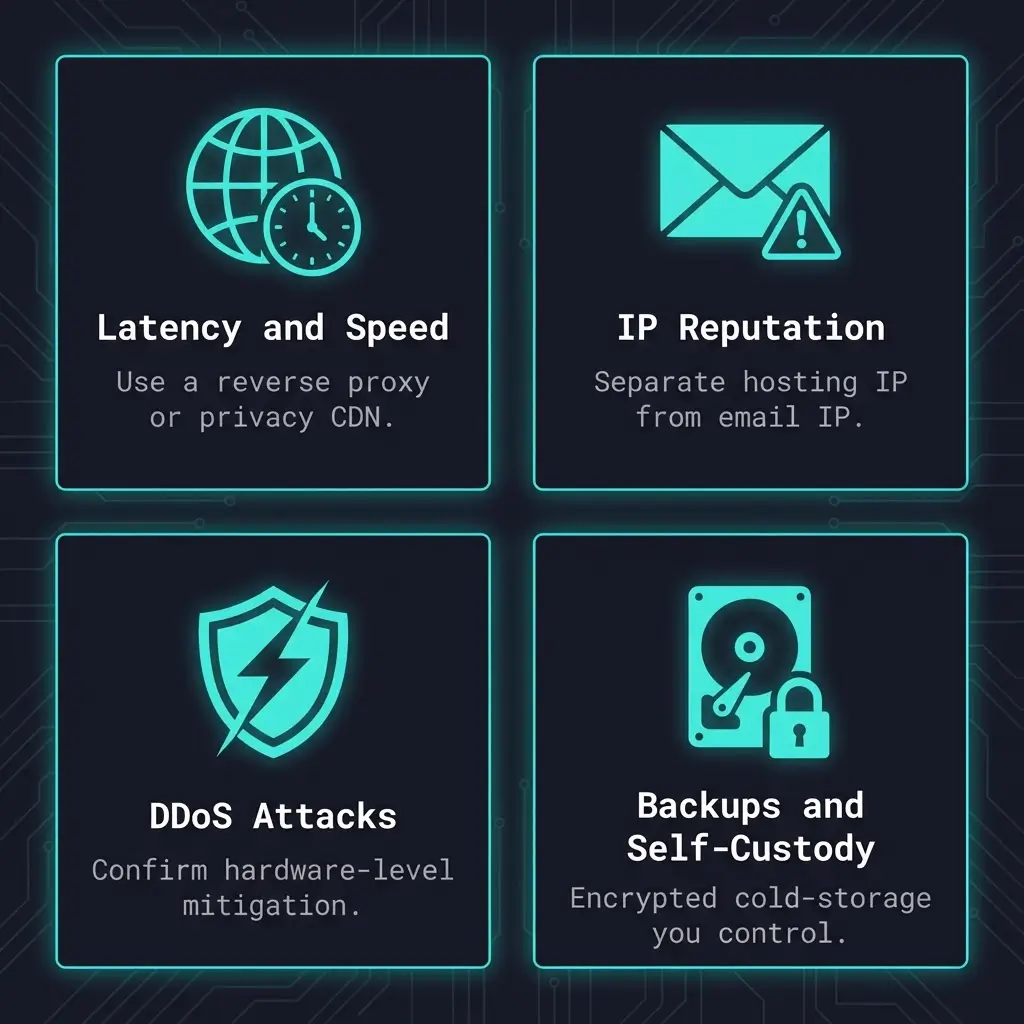
- Latency and Speed. Hosting in Kyiv or Kuala Lumpur when your audience is in New York creates noticeable latency. The fix is a reverse proxy. Deploy Nginx as a caching layer or use a privacy-friendly CDN like DDoS-Guard to serve static assets from edge nodes closer to your users. Your origin server stays offshore and anonymous. Your cached content loads fast.
- IP Reputation. Bulletproof hosting ranges attract spam, phishing, and malware operations. These “bad neighbors” can drag your IP into blacklists, which destroys email deliverability. NEVER use your hosting server’s IP for email. Set up a dedicated SMTP relay through a separate provider, or use a privacy-respecting email service like ProtonMail or Tuta for transactional mail. Keep your hosting IP and your email IP completely separated.
- DDoS Attacks. Anonymity attracts adversaries. Competitors, trolls, state actors, and automated scanners will find you. Confirm your provider offers hardware-level DDoS mitigation before you sign up. VSYS and Shinjiru both include DDoS protection in their plans. If your provider does not, add an external mitigation layer like DDoS-Guard or Path.net before going live.
- Backups and Self-Custody. Offshore providers typically offer minimal or zero managed backup services. This is YOUR responsibility. Maintain encrypted, self-custody backups on hardware you physically control. A server in Kyiv can go offline because of a network cut, a political event, or simple hardware failure. Self-custody = you hold the encryption keys, you hold the copies, you control the restore process. If you do not maintain your own backups, you do not own your data. You are renting it.
OpSec Guide. Buying Without a Trace
Your hosting provider can be perfect and your operational security can still destroy you. Every step of the purchasing process is a potential leak.
Step 1. Network Hygiene.
Access your provider’s signup page ONLY through Tor Browser or a trusted VPN. Mullvad VPN accepts cash payments by mail and assigns no account identifier [33].
If you use Tor, verify you are on the provider’s real .onion address (if available) to avoid phishing. NEVER sign up from your home IP, your office IP, or any network connected to your real identity.
Step 2. The Email Gap.
- Create a burner email account using Tuta or ProtonMail.
- Register that email through Tor.
- Use it ONLY for this hosting account. Do not reuse it for any other service. Do not link it to a phone number.
If you must provide a phone number for email registration, use an anonymous VoIP service paid in crypto.
Step 3. The Financial Chain.
This is where most people fail. Sending Bitcoin directly from a KYC exchange (Coinbase, Kraken, Binance) to a hosting provider creates a direct, traceable link between your verified identity and your server. Blockchain analysis firms like Chainalysis can map this connection in minutes.
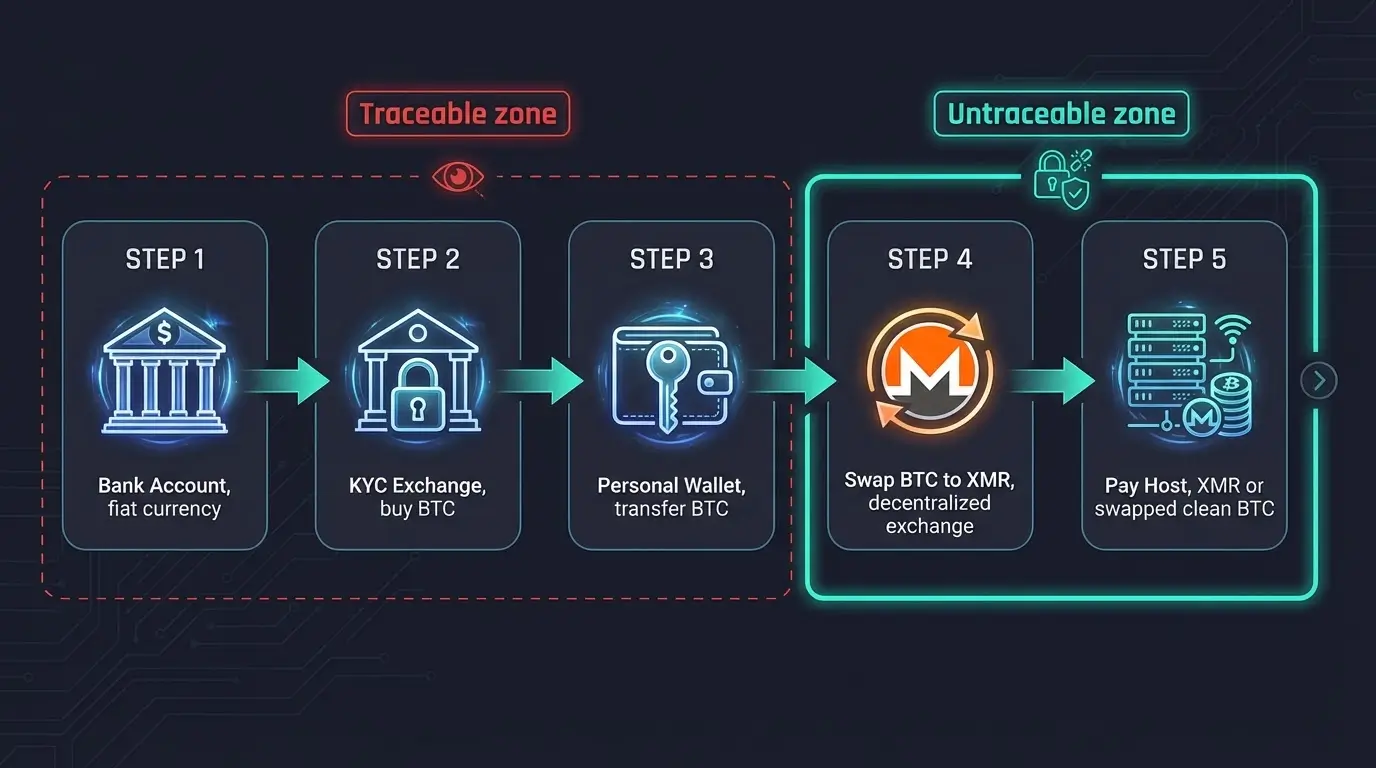
The Monero bridge solves this problem. The workflow goes like this.
- Buy Bitcoin or another liquid crypto on a KYC exchange.
- Transfer it to a personal wallet you control (not a custodial wallet).
- Swap your BTC for Monero (XMR) using a decentralized exchange or atomic swap.
- Monero’s ring signatures, stealth addresses, and confidential transactions break the traceability chain [34].
From your Monero wallet, either pay the host directly in XMR (if accepted) or swap back to BTC and pay from that clean wallet.
Why does this matter?
Bitcoin’s blockchain is fully transparent.
Every transaction is publicly visible and permanently recorded. Blockchain analysis firms have built sophisticated heuristic models that can cluster wallet addresses and identify patterns.
A single BTC transfer from your Coinbase account to a hosting provider’s payment address tells anyone watching exactly who rented that server.
Monero’s protocol makes this analysis fundamentally impossible by design.
- Ring signatures mix your transaction with decoy inputs.
- Stealth addresses generate one-time destinations.
- RingCT hides the amount transferred.
The result is that an observer cannot determine the sender, receiver, or amount of any Monero transaction [35].
FAQ. Anonymity, Law, and Limits
Bottom Line
Your hosting provider is only one layer of your privacy infrastructure. You are the weakest link.
- The best bitcoin offshore hosting provider on Earth cannot protect you from logging into your server panel from your home IP.
- It cannot save you from paying with a BTC address linked to your Coinbase account.
- It cannot help you if you register a domain with your real name.
The infrastructure is available. The tools exist. The jurisdictions are favorable.
Your operational security is the variable that determines whether any of it actually works.
Build your threat model FIRST. Then choose your provider.
Citations
- [1] Tuta, “Fourteen Eyes Countries”, January 12, 2026
- [2] TRM Labs, “The Rise of Monero: Traceability, Challenges, and Research Review”, October 7, 2024
- [3] Shinjiru Technology, “About Us”, Accessed February 2026, “Founded in 2000”
- [4] HostAdvice, “Shinjiru Reviews”, February 9, 2026, “ISO 9001:2008 quality assurance”
- [5] Shinjiru, “Homepage”, Accessed February 2026, “HostAdvice Top 25 Offshore Hosting 2026”
- [6] Shinjiru, “Strongbolt Offshore Hosting”, Accessed February 2026
- [7] Impreza Host / Cryptwerk, “Impreza Host | The King of Offshore Servers”, Accessed February 2026
- [8] Reddit r/Hosting, “Impreza host for hosting tor hidden service review”, March 7, 2023
- [9] PalexWeb, “Homepage”, Accessed February 2026
- [10] FlokiNET, “Your privacy is the default setting”, Accessed February 2026
- [11] FlokiNET, “Privacy Policy”, May 5, 2023
- [12] FlokiNET, “Payment Methods”, Accessed February 2026, “Cash by Post”
- [13] FlokiNET Knowledgebase, “Payment methods”, Accessed February 2026
- [14] WHTop, “FlokiNET Review 2026”, December 12, 2025
- [15] Wikipedia, “Icelandic Modern Media Initiative”, Accessed February 2026
- [16] Freedom House, “Iceland: Freedom on the Net 2024”, 2024
- [17] WHTop, “OrangeWebsite Review 2026”, Accessed February 2026, “green operations powered by geothermal”
- [18] IPinfo, “AS6698 Virtual Systems LLC”, Accessed February 2026
- [19] VSYS Host, “Homepage”, Accessed February 2026
- [20] BlackHatWorld, “VSYS.host Offshore Hosting”, September 28, 2020
- [21] WHTop, “VSYS Review 2026”, Accessed February 2026, “9.4/10 based on 42 user reviews”
- [22] HostAdvice, “AbeloHost Reviews”, January 26, 2026, “256 Users”
- [23] BlackHatWorld, “Worst Experience With Abelohost”, January 4, 2022
- [24] WebCare360, “Homepage”, Accessed February 2026
- [25] WebCare360, “Homepage”, Accessed February 2026, “5,000+ clients across 120 countries”
- [26] WebCare360, “Bitcoin Web Hosting”, Accessed February 2026
- [27] WebCare360, “Homepage”, Accessed February 2026, Pricing section
- [28] SuperBitHost, “Homepage”, Accessed February 2026
- [29] WHTop, “SuperBitHost Review 2026”, Accessed February 2026, “7.8/10, 5 user reviews”
- [30] TheOnionHost, “Terms of Service”, January 1, 2025
- [31] HostAdvice, “TheOnionHost Reviews”, Accessed February 2026, “125 Users”
- [32] HotFrameworks, “Best DMCA Ignored Hosting on the Market in 2026”, January 5, 2026
- [33] Mullvad VPN, “Homepage”, Accessed February 2026
- [34] CYJAX, “The (near) impossibility of tracing Monero”, April 3, 2023
- [35] Kumar et al., “An Empirical Analysis of Traceability in the Monero Blockchain”, 2018
- [36] United Nations, Universal Declaration of Human Rights, Article 12, 1948
