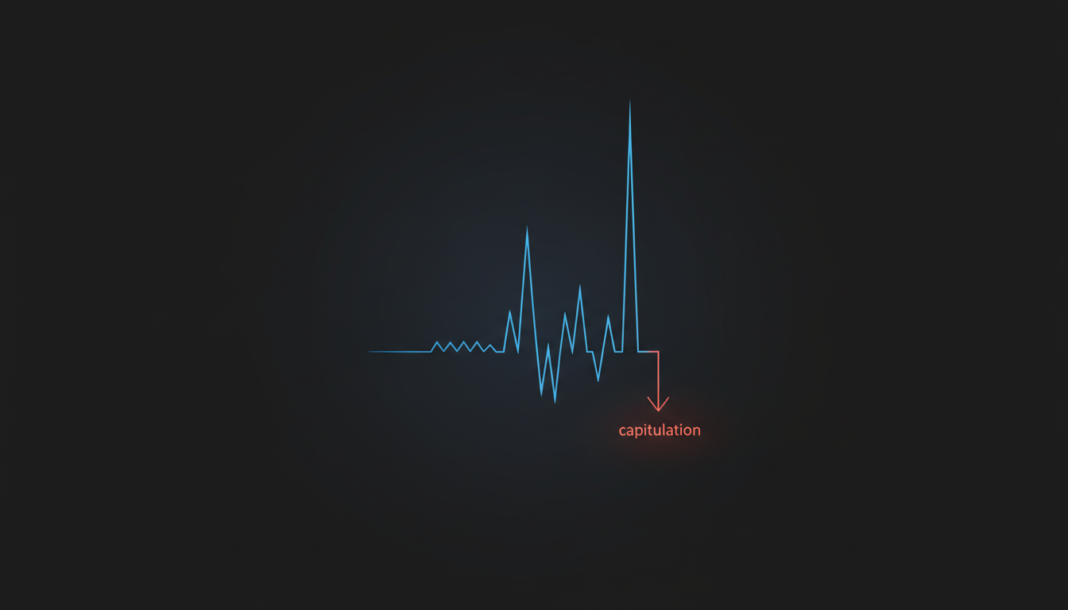

Bitcoin’s market structure has entered a period of heightened volatility, with its 30-day realized volatility on Binance reaching approximately 0.83, its highest level since 2022. This shift follows a prolonged period of stability and is fueled by significant selling pressure from Short-Term Holders, who are realizing average daily losses exceeding $1.26 billion. The cryptocurrency is now testing a crucial support band between $65,000 and $70,000, where a dense concentration of recent buyer cost-basis exists.
Bitcoin’s market structure has shifted into a visibly more volatile phase, with 30-day Realized volatility on Binance climbing close to 0.83. This marks its highest reading since 2022, ending a period where volatility was compressed between 0.42 and 0.45.
The expanding daily price ranges coincide with intense selling pressure from Short-Term Holders. Data shows the 7-day average of their realized losses exceeds $1.26 billion daily, with occasional spikes above $2.4 billion.
Such loss magnitudes closely resemble stress levels seen during the FTX-driven volatility surge of 2022. Relatively thin spot liquidity has allowed each wave of selling to generate larger price swings.
Against this backdrop, Short-term holders transferred more than 23,300 BTC to exchanges at a loss within a 24-hour period. Meanwhile, larger wallets holding 100+ BTC continued expanding, indicating longer-term accumulation.
Bitcoin is repeatedly testing the $65,000–$70,000 band, which represents a dense cost-basis zone for short-term holders from the 2025 rally. The heaviest concentration, according to data, sits between $66,900 and $70,600.
If short-term holder losses keep moderating and volatility falls, Bitcoin may stabilize above $65,000. However, persistent exchange inflows and repeated rejections at $70,000 could turn the band into a prolonged liquidity trap.