

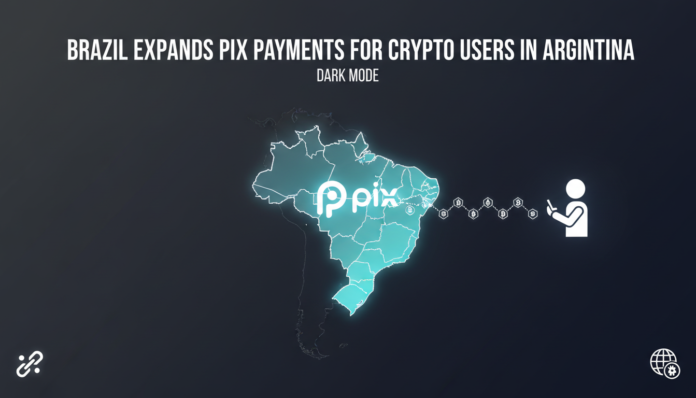
The Brazilian central bank has expanded its Pix instant payment system to allow Brazilians living in Argentina to use the service. This integration facilitates cross-border payments and highlights the deep connection between Pix and major cryptocurrency platforms in Brazil. A recent industry report underscores Argentina’s leading position in per capita crypto adoption in Latin America, driven by economic factors.
The Banco Central do Brasil expanded its Pix digital payments system. Brazilians in Argentina can now use it to pay for goods, services, and send payments in both countries.
The central bank’s instant payments platform is accepted by major crypto platforms operating in Brazil. These include the Lemon crypto app, Binance Pay, Crypto.Com, the Mercado Bitcoin exchange and the Kraken crypto exchange.
Argentina ranks first for crypto adoption per capita in Latin America. Brazil ranks first in total crypto value received, according to Lemon’s State of the Crypto Industry in Latin America 2025 report.
Argentina has about four times the number of crypto users it had during the 2021 market cycle. The Latin America region has about a three times higher adoption rate than the United States.
“Argentina recorded 5.4 million crypto app downloads in 2025, with more than 90% corresponding to wallets that implemented Pix payments in Brazil,” the report’s authors stated. Lemon also attributed a surge in its user downloads to the Pix system.
Users in high-inflation jurisdictions have turned to digital assets as an alternative. They seek options beyond traditional fiat currencies and the legacy financial system.
The Argentine peso clocked its lowest annual inflation rate in eight years in 2025. Inflation reduced threefold from the previous year to 37%.
Argentina’s government also removed currency controls, allowing residents to sell and buy US dollars freely. This previously created a black market for the greenback and dollar-pegged stablecoins.
The report said this economic improvement has opened the door for new crypto use cases. These extend beyond savings and cross-border remittances for Argentine residents.
