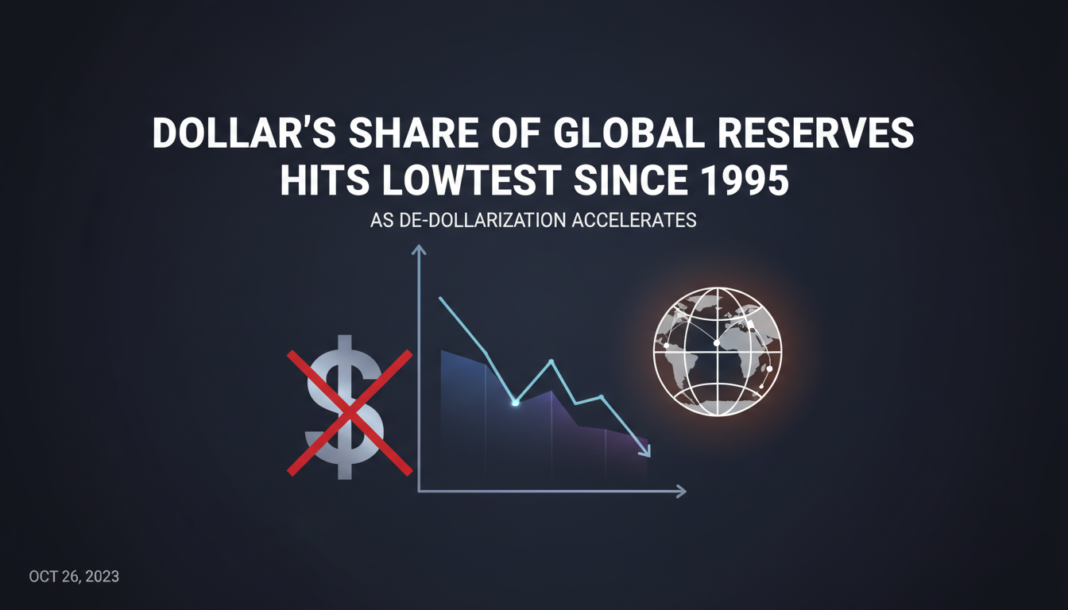

New International Monetary Fund data reveals the US dollar’s share of global foreign exchange reserves has fallen to 56.32%, its lowest point since 1995. This continues a three-decade decline from a peak of 72% in 2001, as central banks diversify into gold, commodities, and local currencies. The accelerated de-dollarization trend raises questions about the greenback’s long-term dominance and potential economic repercussions for the United States.
The latest data from the International Monetary Fund shows the US dollar now controls 56.32% of global foreign exchange reserves. This marks its weakest position since 1995, continuing a steady decline from a 72% share in 2001.
Global central banks currently hold nearly $12 trillion in foreign exchange reserves. While the US dollar remains at the top, its unchallenged dominance is steadily ending as institutions diversify their holdings.
Developing countries in Asia, Africa, and Latin America are prioritizing their economies over holding US-denominated assets. Central banks are now buying gold, other commodities, and leading local currencies.
The DXY index, which tracks the US dollar’s performance, is struggling to climb above the 100 level. It is currently trading in the 97 range after dipping close to 8% in one year.
The currency had also fallen 10.5% at one point, leading investors to take entry positions with other currencies. If the trend continues, the dollar’s reserve share could dip below the 50% level.