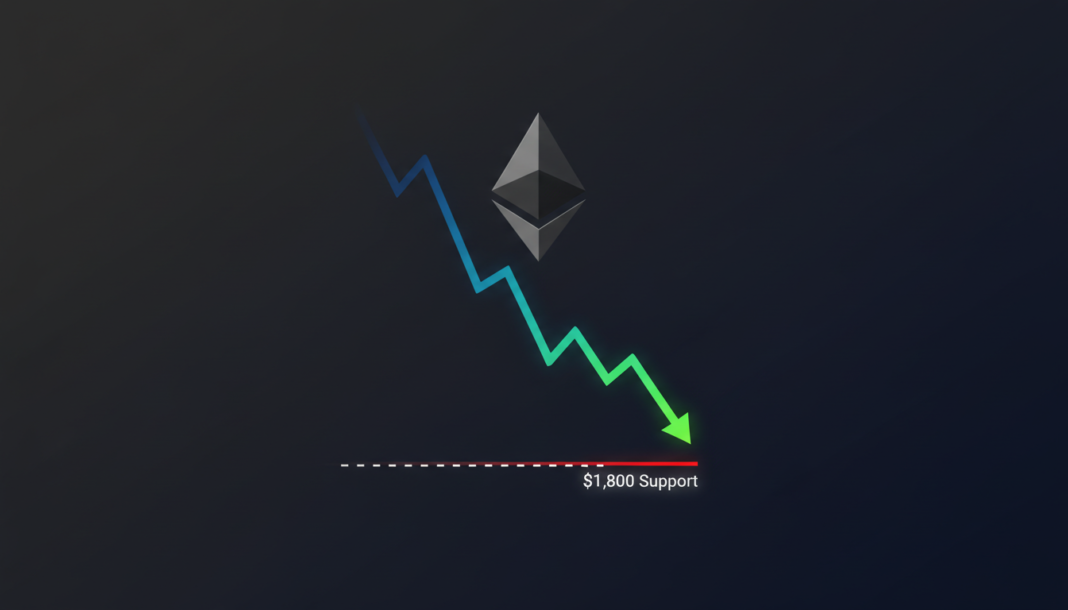

On February 28, 2026, geopolitical conflict triggered a sharp decline in cryptocurrency markets. Ethereum (ETH) broke critical support at $1,900, with its next key level at $1,800. Despite the price drop, on-chain data showed a continued decline in exchange reserves, suggesting some accumulation during the volatility.
Escalating conflict between Iran and Israel rattled global markets on February 28, triggering immediate risk-off behavior. Bitcoin dropped first, and Ethereum followed, resulting in aggressive flushing of leveraged traders.
ETH lost the $1,900 support on the 4‑hour chart, shifting short‑term momentum decisively bearish. The $1,800 level emerged as the next decisive zone, with a failure there potentially exposing ETH to fresh lows.
On the monthly timeframe, Ethereum tapped its ascending support trendline again, which defines a broader bullish pennant structure. A break below $1,800 would threaten this structure, potentially leading to a decline toward $1,500.
The pattern in Transaction Count showed a similarity to the 2017 cycle, which saw a surge before a price decline that preceded a bull market. “History does not repeat perfectly, but it often rhymes,” the analysis noted.
Meanwhile, Exchange Reserves continued to decline despite falling prices, with coins moving off exchanges during the volatility. This behavior suggested some participants were positioning for a future move rather than panic selling.