

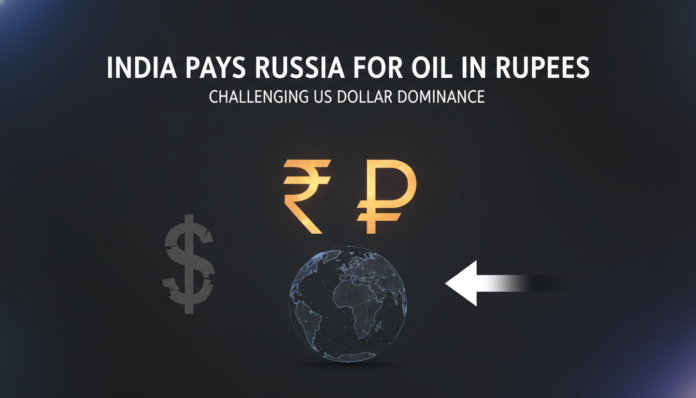
Amid geopolitical tensions and a shifting trade landscape, the US dollar faces competitive pressures as nations seek alternatives for international transactions. A notable development involves Indian refineries using rupees to pay for Russian oil, with funds later converted into other currencies like the Yuan. This occurs alongside a severe fuel crisis in Australia and Iran’s rejection of a US peace proposal, outlining specific conditions for ending the conflict.
The US dollar is encountering headwinds despite being supported by inflation fears stemming from the US-Iran war. The Chinese Yuan remains a tough competitor, while a new development directly challenges dollar dominance in energy markets.
Indian refineries are now using rupees to make payments to Russian oil sellers, according to a report. These funds are deposited into special overseas Russian accounts and are subsequently converted into currencies like the Yuan and Dirham.
This shift aims to limit exposure to US policy and reduce reliance on the dollar. Russian firms are also open to receiving payments in Singapore dollars and Hong Kong dollars, depending on buyer convenience and banking capabilities.
The move coincides with global oil flow disruption due to the US-Iran war and the closure of the Strait of Hormuz. These events are impacting global oil prices and sparking inflation fears across major economies.
Separately, a severe fuel crisis is unfolding in Australia. “Over 500 gas stations in Australia have now run out of fuel as the nation’s fuel crisis worsens,” stated The Kobeissi Letter.
The report specified that 187 stations had completely run out of diesel, while 32 service stations had run out of all fuel types. This situation underscores the broader energy market instability.
In geopolitical developments, Iran has officially rejected a US peace proposal. The country set five conditions for ending the war, which were detailed by The Kobeissi Letter.
Iran’s conditions include an immediate end to US attacks and assassinations on Iran and the establishment of concrete guarantees against future US attacks. The remaining demands involve clear terms for war damages and broader regional security assurances.
