

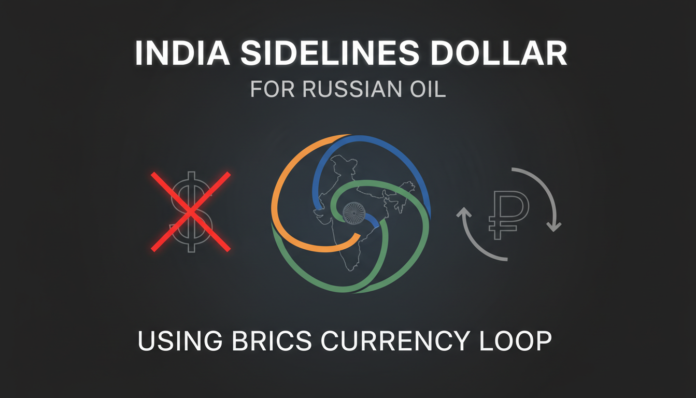
India is increasingly using local BRICS currencies instead of U.S. dollars to pay for Russian oil, according to recent reports. The country is depositing rupees but converting them into currencies like the Chinese yuan and UAE dirhams to complete trades. This shift directly supports the BRICS alliance’s de-dollarization agenda and could impact U.S. economic strategies by reducing global demand for dollars.
India is sidestepping the U.S. dollar for Russian oil payments by utilizing a loop of local BRICS currencies. The country deposits rupees but converts them into currencies such as the Chinese yuan and UAE dirhams to finalize transactions.
This practice aligns with the broader BRICS initiative advocating for local currency settlements in oil trade. Bloomberg reported that Russia first informed India of alternative payment arrangements to circumvent the U.S. dollar, which the country agreed to.
The primary currencies now used for this trade are the Indian rupee, Chinese yuan, Russian ruble, and UAE dirham. Increased usage of these currencies provides an economic boost to the member nations involved in the transactions.
A decrease in global dollar usage for such major trades affects a key U.S. economic mechanism. The U.S. relies on countries paying in dollars for oil to help fund its national deficit, which has reached $39 trillion.
If America fails to export its inflation via the U.S. dollar, domestic inflation risks could rise. Simultaneously, India is actively seeking to internationalize the rupee through these practical trade arrangements.
Despite regional economic and border rivalries, India and China remain united on this financial front for mutual benefit. The move continues the de-dollarization agenda that BRICS kick-started in 2022.
