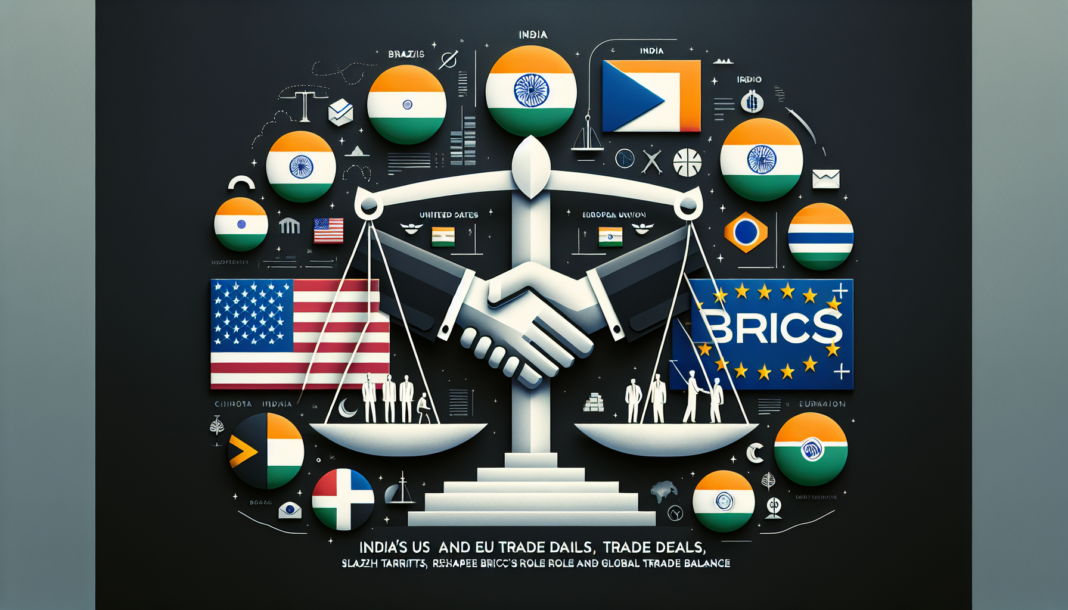

On February 3, 2026, Prime Minister Narendra Modi and Donald Trump agreed to a trade deal that immediately set a reciprocal tariff on Indian goods at 18%. The pact followed India’s landmark free-trade agreement with the EU on January 27, and both moves aim to deepen India’s global market access (Ed. note: reports cite different prior tariff levels).
The EU pact cuts tariffs on more than 96.6% of EU goods entering India and opens services and investment across all 27 member states. Ursula von der Leyen said, “We have concluded the mother of all deals. We have created a free trade zone of two billion people…”
India-EU duty reductions could save exporters up to about $4.4 billion annually. Key Indian sectors such as gems, jewelry, and textiles expect notable gains from the European agreement.
Trump announced the U.S. deal on social media, writing “Out of friendship and respect for Prime Minister Modi… lowering it from 25% to 18%.” India agreed to eliminate many tariffs and non-tariff barriers for U.S. goods and pledged purchases exceeding $500 billion in U.S. energy, technology, and agricultural products.
BRICS trade has expanded rapidly, with intra-bloc merchandise exports rising from $84.2 billion in 2003 to $1.17 trillion in 2024. India’s 2026 BRICS presidency must now balance deeper Western ties with the bloc’s practical cooperation goals (According to the BBC).