

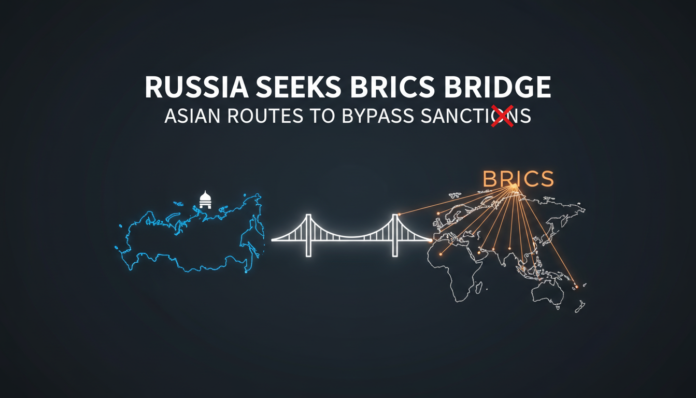
Russia is actively pursuing alternative financial and logistical systems to counter Western sanctions and economic isolation. According to a report, the nation is focusing on the International North-South Transport Corridor (INSTC) to reroute trade and developing the blockchain-based BRICS Bridge platform for cross-border payments using central bank digital currencies. These initiatives aim to reduce reliance on the US dollar and traditional trade routes.
Facing monetary pressure from sanctions, Russia is pursuing alternative financial systems like the International North-South Transport Corridor (INSTC) and BRICS Bridge to circumvent economic isolation. The nation is diversifying trade towards the Middle East and Asia as traditional routes are disrupted.
The INSTC is a 7,200-kilometer multimodal network connecting Russia to India via Iran. This corridor serves as an alternative to the Suez Canal, shortening the distance by about 40% and reducing shipment times from 45 days to 25 days. Russia’s logistical pivot is a direct response to Western pressure on its economy.
Concurrently, Russia is looking to develop the BRICS Bridge, a system that connects the central bank digital currencies among member nations. This blockchain-based platform has reached an advanced pilot stage and involves members including China, India, the UAE, Brazil, South Africa, and Iran.
The system eliminates the need for the US dollar by enabling direct peer-to-peer transfers between banks. Central bank digital wallets are central to its operation and could reduce transaction costs by 40%.
While ambitious, the BRICS Bridge strategy is progressing slowly among members. The Reserve Bank of India (RBI) has proposed that all members link their CBDCs to one currency for trading, a topic set for discussion at an upcoming summit.
