

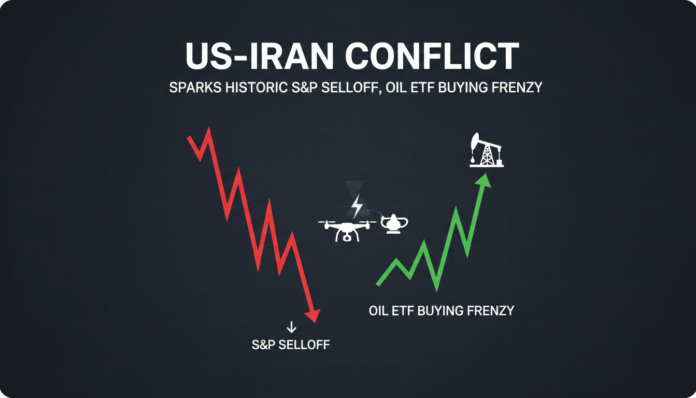
Geopolitical tensions between the U.S. and Iran, including the closure of the Strait of Hormuz, are causing significant volatility in traditional financial markets. The CBOE Volatility Index (VIX) is signaling investor fear, while oil prices have spiked to $100 per barrel. Institutional investors are offloading S&P 500 futures at a historic rate, and retail investors are flooding into oil ETFs like the United States Oil Fund.
Geopolitical instability is rattling global markets as the U.S.-Iran conflict and the closure of the Strait of Hormuz drive oil prices sharply higher. Analysts warn the coming week could be particularly sensitive to major transformations stemming from these macro events. The stock market is facing clear headwinds, with the CBOE Volatility Index (VIX) giving a significantly wider reading, indicating heightened investor anxiety about a potential market drop.
Two key market indicators are now flashing a selling signal for equities ahead. “But what you’re seeing is still a lot of uncertainty when it comes to the outcome and the duration of the [Iran] war and what it is going to mean for inflationary pressures,” an analyst named Mulberry stated. Rising oil prices are weighing on the U.S. economy, creating fears of inflation and interest rate uncertainty among market participants.
Investors are pivoting toward oil-based assets amid the crisis. The United States Oil Fund (USO) ETF has attracted its largest inflows ever, according to data mentioned by JPMorgan. Daily retail purchases in the fund surged to over $30 million, a level surpassing anything seen in recent years.
Institutional investors are simultaneously exiting equities at a record pace. During March 3-10, asset managers sold $36.2 billion in S&P 500 futures, which was the largest weekly sale in over a decade. This historic selling dwarfs the activity seen during the 2020 market crash and the 2022 bear market, drastically reducing their net long positioning.
