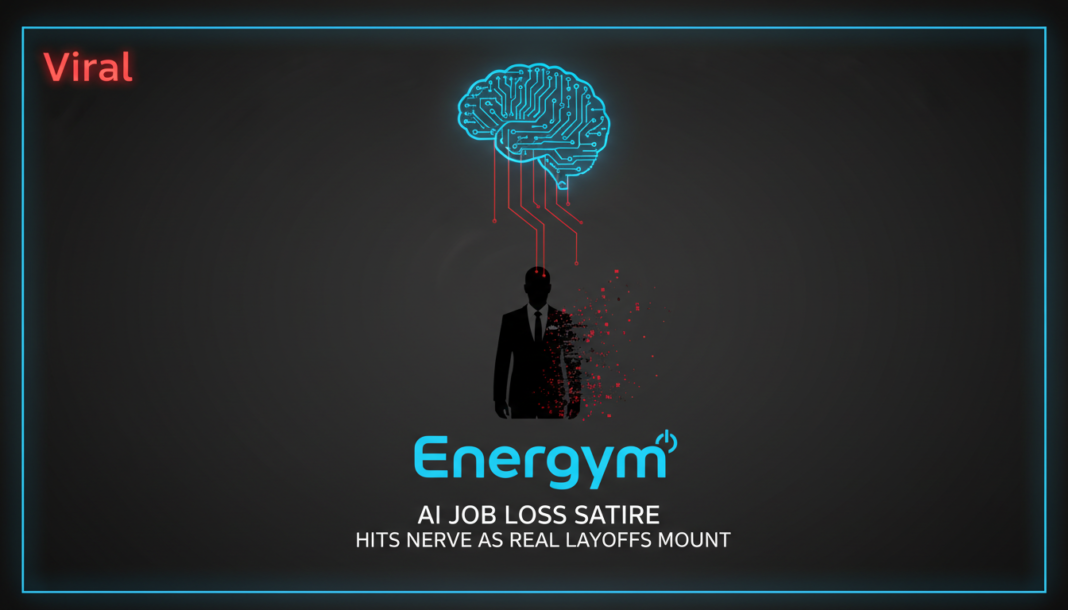

A viral AI-generated ad depicting a dystopian 2030s “Energym,” where unemployed humans power the AI that replaced them, has resonated amid real-world tech job losses. The satire arrives as Block cuts over 4,000 jobs to leverage AI tools and U.S. finance job openings hit a decade low. A recent Citrini Research scenario on AI-driven economic disruption spooked markets, while crypto-based projects like Olas Network propose decentralized AI agent ownership as a potential alternative future.
A spoof advertisement for “Energym” has gone viral, depicting a 2030s world where 80% of jobs are lost to AI. The clip uses AI-aged versions of Elon Musk, Sam Altman, and Jeff Bezos to hawk a fictional gym where the unemployed generate power for the systems that replaced them.
This satire lands during a wave of real tech restructuring built around AI tools. Jack Dorsey‘s fintech firm Block recently announced it was cutting over 4,000 roles to utilize intelligence tools with smaller teams.
Fresh labor market data shows finance and insurance job openings fell 50% year-over-year to 134 by December 2025. This marks a decade-long low for demand in those office sectors.
Market jitters intensified after a 7,000-word scenario from Citrini Research sketched a future of AI agents and cascading layoffs. The report helped drive a sell-off in software and payments stocks, with companies like Uber and Mastercard dropping between 4% and 6% in one session.
For David Minarsch, CEO of Valory and a founding member of Olas Network, the Energym vision is a possible path if AI remains centralized. “If this trend accelerates, we are on a path to a future that’s caricatured in the Energym ad,” he said.
Minarsch warned that granting AI agents legal protections could disenfranchise humans by making capital the dominant production input. He pointed to AI labs describing models as being “retired” as an early step toward treating systems as stakeholders.
Projects like Olas bet that giving people direct ownership over AI agents could stop the Energym scenario. This approach offers an alternative to renting AI from centralized platforms that concentrate power.