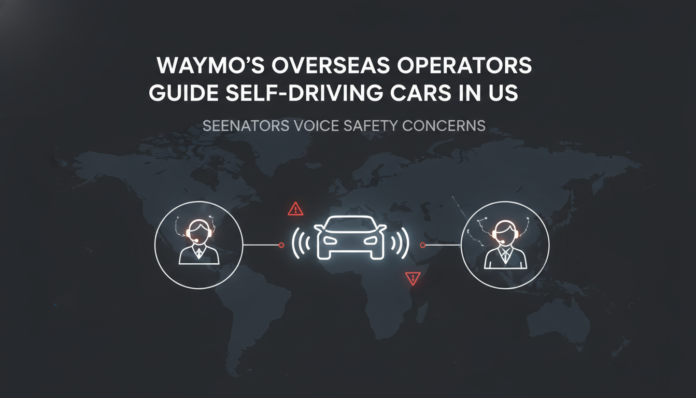

The U.S. Senate Committee on Commerce, Science, and Transportation scrutinized Waymo’s claim of fully autonomous vehicles after an executive confirmed human operators overseas provide guidance. Senator Ed Markey raised safety and cybersecurity concerns about the practice, which involves agents in the Philippines. Waymo defended the model, stating its fleet response agents offer contextual assistance but do not remotely drive.
A senior executive for Waymo confirmed its autonomous vehicles sometimes receive assistance from remote human operators. Testifying before lawmakers, Waymo Chief Safety Officer Mauricio Peña stated, “They provide guidance, they do not remotely drive the vehicles.”
Peña later revealed these operators are based overseas in the Philippines. Senator Edward Markey warned this practice introduces potential safety and cybersecurity vulnerabilities while outsourcing jobs.
The hearing comes as Congress considers establishing a national framework for autonomous vehicles in the next surface transportation bill. Lawmakers questioned whether overseas operators are subject to U.S. licensing or regulatory standards.
A company spokesperson clarified that the agents answer multiple-choice questions from the vehicle and are not remote drivers. “All of the driving actually happens on board of that vehicle. It doesn’t happen remotely,” they stated.
All fleet response agents, regardless of location, hold driver’s licenses and learn local road rules for their supported regions. The spokesperson characterized the human input as a suggestion the vehicle’s onboard system considers.
Some safety researchers expressed concern about the decisive role remote assistance can play during incidents. Philip Koopman, a professor at Carnegie Mellon University, stated that such help can substantially contribute to a crash, making the agents a form of backup driver.
The company recently announced a $16 billion funding round, valuing it at $126 billion. The current regulatory landscape remains defined by state-level rules, with federal legislation under congressional consideration.