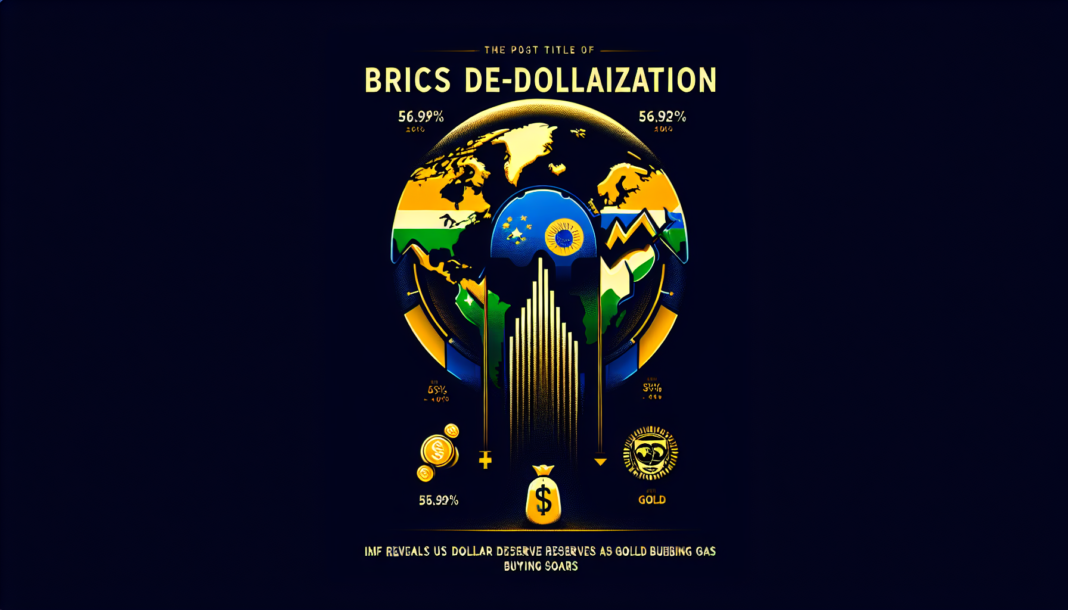

Central bank holdings of the US dollar fell to 56.92%, down from 58.2% in 2024, driven by moves by the BRICS bloc to reduce dollar assets and increase gold reserves. Data shows the shift as part of a broader diversification away from dollar-denominated assets (Ed. note: the source cites both January 2026 and the third quarter of 2025 for the 56.92% figure).
The decline equals a 1.28 percentage-point drop over two years, signaling rising de-dollarization pressures. Central banks purchased more than 1,100 tons of gold in 2025, the largest annual increase in about 70 years.
BRICS countries have been the largest gold buyers over the past three years and have used more local-currency transactions. These actions have directly reduced demand for US dollar reserves and reshaped reserve compositions worldwide.
“In 2000, the dollar accounted for roughly 70% of global foreign exchange reserves, but by the third quarter of 2025, its share had fallen to 56.92%, according to IMF data,” Mamadou Kwidjim Toure stated. “De-dollarization may not happen overnight,” he added.
Russia has reported that its gold investments roughly doubled in value, and gold exposure reached its highest level since 2022. The cumulative effect is a measurable reduction in the dollar’s share of global reserves.