

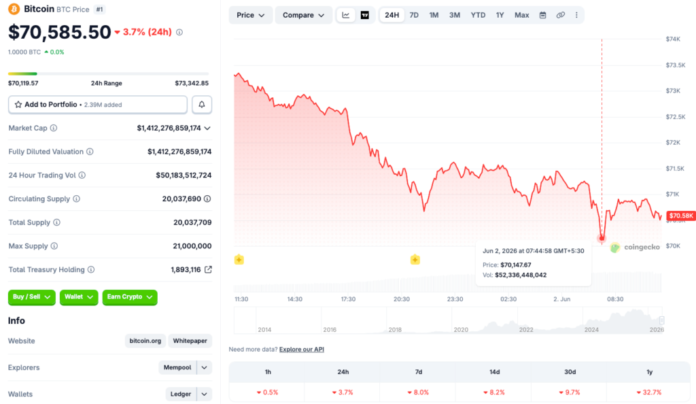
Bitcoin’s price fell sharply, dropping 3.7% in 24 hours to a low near $70,000. The decline follows failed U.S.-Iran peace talks and the reported closure of the Strait of Hormuz, which threatens higher oil prices and inflation. This geopolitical tension is pushing investors away from riskier assets like cryptocurrencies, though some hope rests on potential regulatory clarity from pending legislation.
Bitcoin (BTC) experienced a significant decline over the last 24 hours. According to CoinGecko’ clean BTC data, the asset fell to a low of $70,147, representing a 3.7% drop in a day and an 8% fall over the past week. The price appears to have found some support at the $70,000 level.
The cryptocurrency’s price crash coincides with the latest failure in talks between the US and Iran. The Strait of Hormuz was stated to be closed off once again, reigniting concerns about crude oil price hikes. Higher oil prices could drive inflation even further upward.
Persistent inflation had already triggered an earlier wave of Bitcoin’s price decline. The possibility of the conflict re-escalating may cause the Federal Reserve to keep interest rates unchanged or even increase them. Higher rates typically push investors away from high-risk assets like Bitcoin.
Analysts have shown that Bitcoin has not performed well as a hedge during the current financial crisis. Due to the asset’s diminishing effectiveness as a hedge, billionaire Mark Cuban recently sold almost all of his BTC. More investors may follow suit in the coming weeks.
There remains some hope that the CLARITY Act could bring positive price action if passed into law. The legislation could ease investor discomfort and lead to a surge in market confidence. Bitcoin could potentially recover under such regulatory circumstances.
