

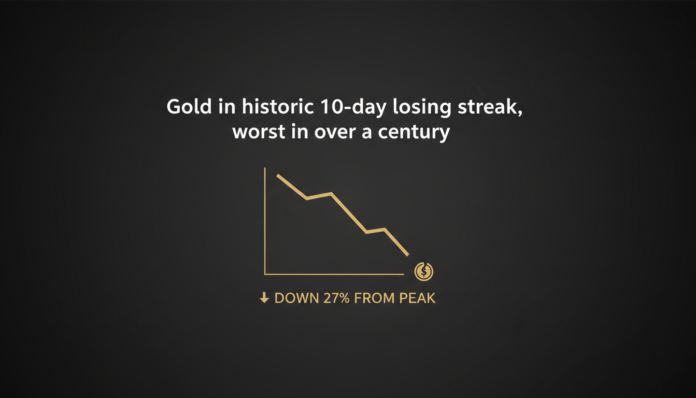
Gold has declined for ten consecutive days, marking its longest losing streak in over a century. The commodities downturn comes amid rising energy costs from geopolitical tensions and market expectations that interest rates will remain elevated. Analysts suggest the pressure may continue in the near term, with a potential rebound tied to future central bank policy shifts.
After months of significant gains, gold prices have entered a pronounced correction. The precious metal has declined for ten straight days, its longest losing streak since February 1920.
Gold had breached the $5,600 mark in January but has since fallen approximately 27 percent. The recent downtrend follows a period where investors sought safe-haven assets due to macroeconomic uncertainty.
Analysts point to rising energy costs following recent military actions as a contributing factor to the decline. Bart Melek, global head of commodity strategy at TD Securities, noted that continued conflict and higher energy prices are “not great news for gold.”
Market expectations for persistently high interest rates are also weighing on the commodity. Data from CME FedWatch indicates a 95.9 percent probability rates will remain unchanged after the upcoming Federal Reserve meeting.
Melek anticipates gold will face continued pressure throughout the second quarter of 2026. However, he stated the outlook could improve later in the year if central banks gain policy flexibility, adding, “I think by year-end, the gold outlook should again look pretty sweet, as we are hoping that by then central banks like the Fed will have more freedom and we could see the dollar ease and rates drop.”
