

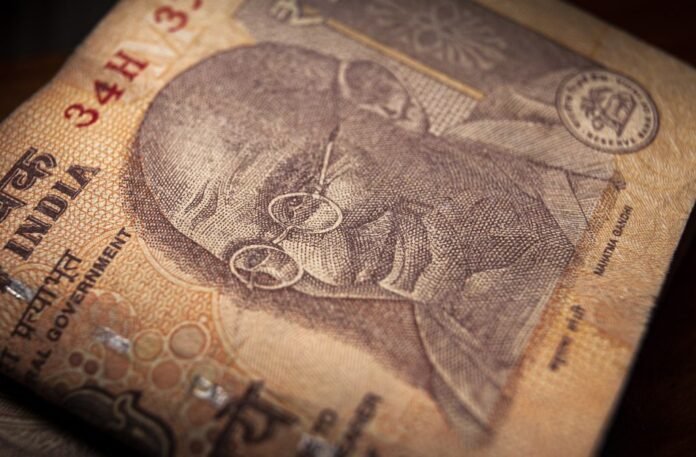
The Indian rupee has declined to approximately 95.87 against the U.S. dollar, raising concerns about its impact on the stock market. Analysts cite rising U.S. Treasury yields, higher crude oil prices, and foreign fund outflows as key pressures. Experts state that while a further fall toward 100 per dollar would increase import costs and inflation, it could also make Indian exports more competitive globally.
The Indian rupee continues to decline against the U.S. dollar, reaching the 95.87 mark. This depreciation is driven by increased U.S. Treasury yields, rising crude oil prices, and foreign fund outflows.
Geopolitical tensions are also a contributing factor as the U.S.-Iran conflict shows no immediate resolution. India imports nearly 90% of its crude oil requirements, making it vulnerable to these price increases and a strong dollar.
According to Pranay Aggarwal, Director and CEO of Stoxkart, “A move of the Indian rupee toward Rs. 100 per US dollar would significantly impact the economy and stock market.” He highlights that a weaker rupee would raise import costs for items like crude oil, electronics, and chemicals. This would subsequently lead to inflationary pressures within the economy.
Aggarwal further added, “Sectors dependent on imports, such as aviation, FMCG, and automobiles, may face margin pressure.” Conversely, he notes that a weaker currency creates opportunities for Indian goods in international markets. He states, “Indian exports become more competitive globally, benefiting pharma, textiles, and manufacturing exporters.”
An extreme scenario was outlined by Jigar Trivedi, Senior Research Analyst at IndusInd Securities. Trivedi said, “In the extreme scenario of an escalating war between the US and Iran, if WTI oil hits $120 per barrel, the rupee could approach 100, putting the economy at risk.” Companies that earn revenue in U.S. dollars could experience higher profits from the currency conversion.
