

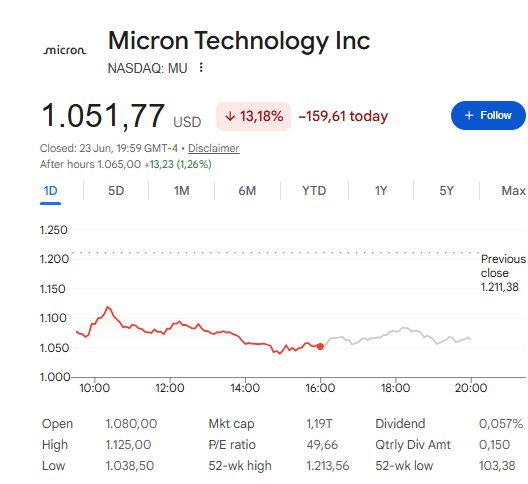
Analysts are skeptical that Micron Technology stock can reach $2,000 in 2026, despite strong demand for its high-bandwidth memory products. The most bullish current price target from Wall Street is $1,750, and shares would need to nearly double from their all-time high. The company’s CEO confirmed that its 2026 HBM production is already sold out, but most projections suggest a more modest near-term gain.
Wall Street analysts currently view Micron Technology’s potential to reach a $2,000 stock price in 2026 as unlikely. The highest published price target is $1,750 from Susquehanna, well below the $2,000 mark. Shares would need to roughly double from their all-time high near $1,200 to achieve that goal.
The primary driver for the stock’s recent performance is a severe shortage of its high-bandwidth memory products. CEO Sanjay Mehrotra confirmed the company sold out its entire 2026 HBM production capacity months ago. This scarcity is a key factor behind the aggressive bidding from traders this year.
Mehrotra stated, “Our Q2 outlook reflects substantial records across revenue, gross margin, EPS and free cash flow, and we anticipate our business performance to continue strengthening through fiscal 2026.” The HBM market is projected to grow from around $35 billion in 2025 to approximately $100 billion by 2028.
Micron has indicated it can only fulfill between half and two-thirds of current customer demand for HBM. Industry analysts expect this supply-demand imbalance to keep prices elevated, though not indefinitely. The company’s AI memory stock growth is almost entirely tied to orders from AI data centers.
Most realistic 2026 price predictions for Micron stock range between $1,500 and $1,750. The average 12-month price target sits closer to $1,000, despite 44 analysts giving the stock a Strong Buy rating. The company continues to add production capacity each quarter to catch up with overwhelming demand.
The consensus suggests a move to $2,000 looks more plausible for 2027 or 2028. This timeline would allow several more years of capacity expansion and earnings growth to align with current demand. Present data does not support the stock hitting $2,000 within the 2026 calendar year.
