

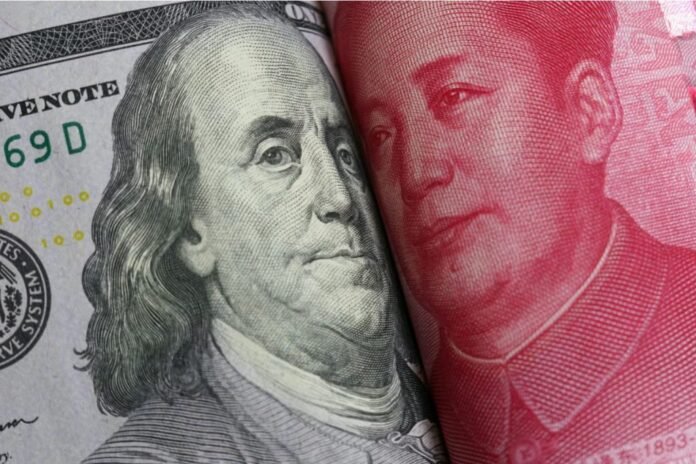
A geopolitical blockade of a key oil shipping route has accelerated a shift away from the U.S. dollar for international trade. Emerging economies are increasingly using the Chinese yuan for commodity payments, with settlements tripling since 2021. Concurrently, the use of cryptocurrencies by sanctioned nations has surged by 700%, reaching $154 billion in transactions and further advancing de-dollarization efforts.
Following a blockade of the Strait of Hormuz, oil procurement stalled and prices rose in the West. Emerging economies have responded by paying for crude oil with the Chinese yuan over the last three months, aiding the de-dollarization agenda.
According to a recent report, yuan payments for oil trade have tripled since 2021. Payments in China’s Cross-border Interbank Payment System (CIPS) reached $214 billion in March.
Cryptocurrencies are also being used to advance de-dollarization, not just the Chinese yuan. A recent report from Chainalysis shows acceptance among sanctioned nations has surged by 700%.
Payments in cryptocurrencies have already reached a whopping $154 billion, and the U.S. dollar plays no role in these. Countries such as Russia and Iran were the frontrunners in accepting digital currencies for payments.
Despite rapid growth, only 3% of global settlements are conducted in the Chinese yuan. The number has doubled over the past five years, with advancement occurring at a faster pace.
