

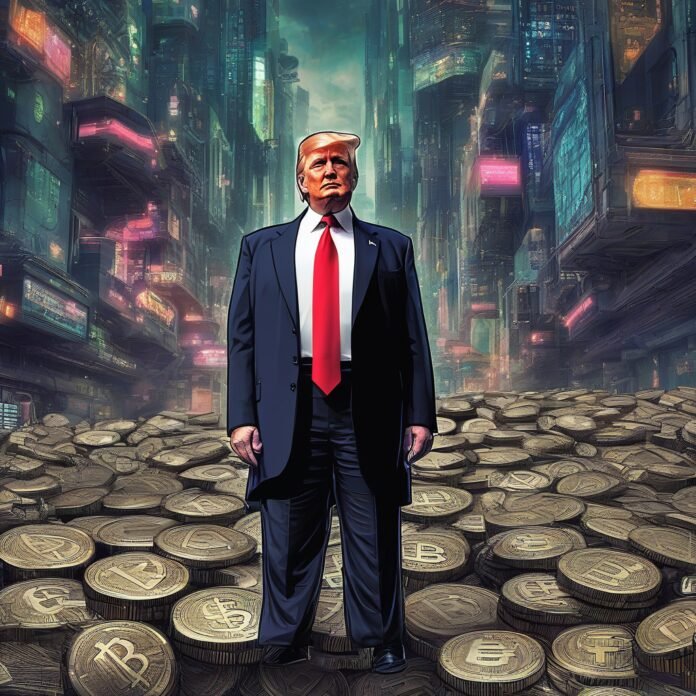
President Donald Trump’s financial ties to the cryptocurrency sector are drawing bipartisan criticism as lawmakers propose an ethics clause requiring him to sell his digital assets. The potential sale could trigger a sizable tax bill on an estimated $88 million in profit, leading to discussions about a tax-deferral mechanism for public officials forced to divest. The debate casts uncertainty over the CLARITY Act, a bill aimed at providing regulatory clarity for digital assets.
As pledged during the election campaign, U.S. President Donald Trump has become a pro-crypto president. However, his financial connections to the sector and support for crypto legislation in Congress are now drawing criticism.
Lawmakers from both parties have raised concerns about conflicts of interest, arguing that Trump’s role in shaping crypto policy could overlap with his personal holdings. Some senators have proposed an ethics clause requiring him to sell those assets.
Trump’s crypto holdings have likely grown to $1.5 billion, marking $88 million in profit. A forced sale could result in a sizable capital gains tax bill.
According to Bloomberg, the proposed ethics clause would permit Trump to postpone paying those capital gains taxes. This tax deferral only delays the due date of taxes, not their elimination.
The proposal aims to shield public officials from an immediate tax bill when ethics rules require divestment. Critics argue the provision could give Trump a substantial financial advantage, while supporters see it as a standard safeguard.
Bloomberg reported that the White House and lawmakers were still negotiating the ethics addendum. Its final language, eligibility rules, and tax treatment could still change before the legislation is introduced or voted on.
The debate follows seven draft crypto tax bills reviewed during a House Ways and Means Committee hearing in June. With these provisions in play, the CLARITY Act appears necessary to provide regulatory certainty.
However, with the Senate schedule indicating the Clarity Act is not an immediate legislative priority, uncertainty around its approval has grown.
