

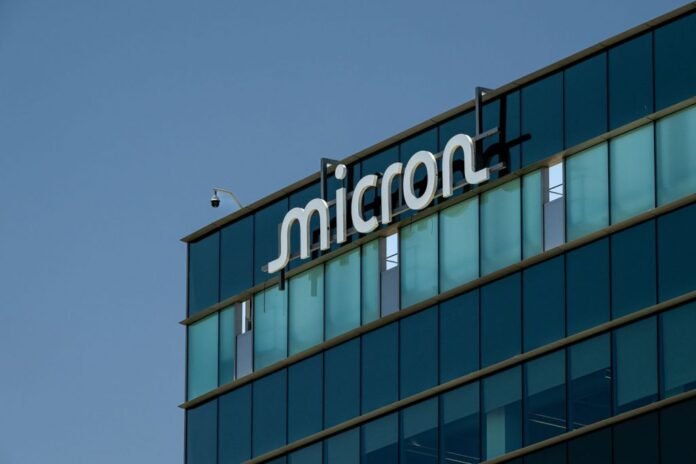
Investors are scrutinizing Micron Technology amid a recent price pullback, despite its substantial gains over the past year. The stock’s forward price-to-earnings ratio of under 8 is flagged by analysts as cheap relative to potential AI-driven growth. Major institutional shareholders Vanguard and BlackRock are adding to their positions, while a strong consensus of brokerages recommends the stock.
Micron Technology stock has climbed roughly 777% over the past 12 months but sits about 17% off its 52-week high. This has renewed debate around whether to buy or sell the shares, with analysts noting a forward price-to-earnings ratio under 8.
Vanguard and BlackRock, the two largest institutional shareholders, have been adding to their positions rather than trimming them. Of 42 brokerage firms covering Micron, 32 rate it a Strong Buy and five rate it a Buy, accounting for over 88% of all active recommendations.
Analyst price targets have been raised, with Melius Research moving to $1,100 and Citi to $840 citing rising DRAM prices. The consensus across 44 analysts polled by S&P Global is a Strong Buy with an average price target of $614.12.
Jim Cramer addressed the stock’s recent dip, calling it a real opportunity. He stated “I’ve been waiting for Micron to come down. This may be the opportunity [buy, buy, buy]… I think Micron’s the only possibility that I heard in that whole list.”
Cramer also noted the valuation case, saying “Micron can keep running because there’s endless demand for its chips from the data center companies and not enough supply… Right now, the stock sells for just six times earnings.”
Revenue forecasts for 2026 have moved sharply from $79.8 billion to $108.7 billion, with EPS estimates climbing from $34.26 to $58.05 per share. The AI data center build-out has created a shortage of high-bandwidth memory, placing Micron at the center of that supply crunch.
Bear case models suggest a $1,000 investment could be worth only $230 to $400 by 2030 if AI investment slows or supply increases. The bull case pushes that same $1,000 to $3,000 or more if tight HBM supply holds through the decade.
