

Russia has proposed that the BRICS alliance establish a joint food reserve to mitigate supply risks from the Middle East conflict, which has disrupted oil and fertilizer shipments through the Strait of Hormuz. The ongoing crisis has already caused a cooking gas shortage in countries like India, affecting the hotel industry. The proposal is expected to be discussed at the upcoming BRICS summit in India as a measure to ensure food security and prevent rampant price increases for essentials.
The conflict in the Middle East has disrupted oil flows, causing a supply squeeze that is affecting cooking gas availability. Countries in the subcontinent, particularly India, are facing an LPG crisis that has led some eateries to charge customers an extra fee.
Russia, the world’s largest wheat exporter, has subsequently proposed that BRICS begin a joint food reserve contingency. This initiative aims to protect the bloc from collateral damage stemming from the US, Iran, and Israel conflict.
Close to half of the world’s food relies on fertilizers, and one-third of global fertilizer trade passes through the Strait of Hormuz. This critical route has been closed for over a month, creating a shortage of supplies across Asia.
The creation of food reserves could benefit BRICS by stabilizing prices for everyday essentials. The war has posed serious risks to global supply chains, with existing fertilizer shortages compounding the issue.
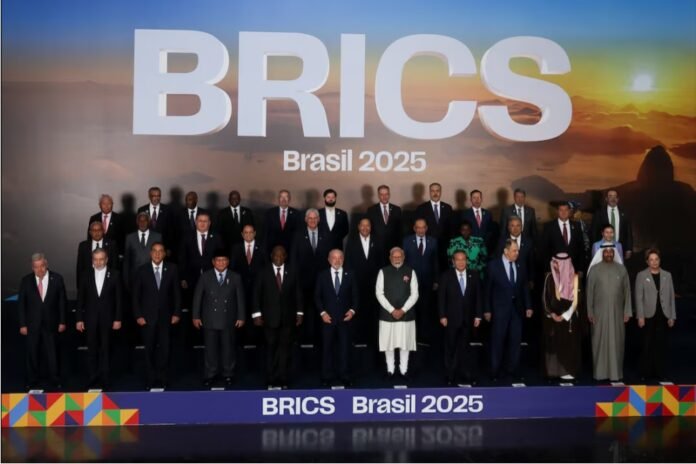
The BRICS alliance could discuss forming this joint food reserve at its upcoming 18th summit in India. “To ensure food security, it is highly important to expand cooperation with friendly countries, primarily the member states of the Eurasian Economic Union and BRICS, including through the creation of joint food reserves,” stated Alexander Maslennikov, deputy secretary of Russia’s Security Council, as mentioned in a Reuters report. The summit will see the 11-member alliance convene to discuss ways to protect their economies.
