

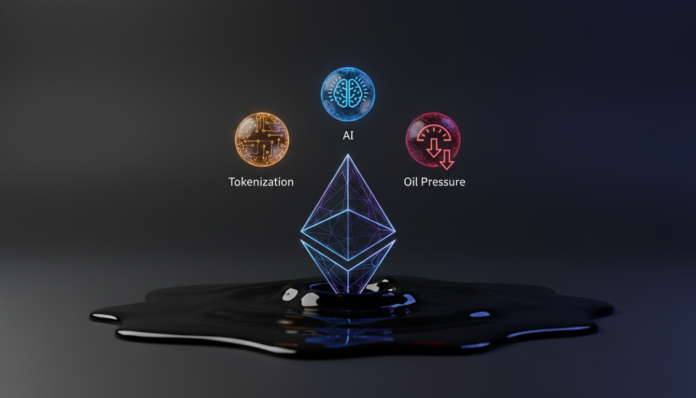
Ethereum’s price faces near-term pressure from rising oil prices, which dampen risk appetite among traders. Analyst Tom Lee identified oil as a key headwind but noted longer-term drivers like asset tokenization and agentic AI could support Ethereum demand through 2026. Despite trading down over 3% to approximately $2,117, institutional interest and network adoption provide a counterbalance to the macro volatility.
Ethereum’s price outlook is under pressure as rising oil prices weaken trader appetite for the asset. Analyst Tom Lee stated “rising oil prices is the biggest headwind” for Ethereum in a social media post.
Lee placed macro pressure at the center of the ongoing ETH debate. Rising energy prices are typically inflationary and can lead to tighter financial conditions.
As of the latest data, ETH is trading at approximately $2,117. This represents a daily decline of over 3%.
The situation often exerts pressure on technology stocks and digital assets. ETH is considered a growth-oriented crypto asset.
However, this short-term pressure has not diminished the longer-term bullish case. Investors are monitoring two key growth drivers: tokenization and agentic AI crypto systems.
The concept of tokenization is a predominant trend in the digital asset landscape. Financial firms are exploring blockchain systems for real-world assets.
This trend could improve the Ethereum price outlook if more tokenized assets move on-chain. More activity can lead to greater network demand and transaction volume.
Artificial intelligence is another area of growing demand for Ethereum. Developers are creating systems for AI agents to interact with decentralized applications.
This emerging sector could benefit Ethereum because smart contracts allow programmed transactions. AI agents may need blockchain networks to complete actions autonomously.
Institutional interest also remains part of the broader Ethereum market outlook. Long-term interest stays strong with spot ETFs and ongoing development initiatives.
The Ethereum price outlook remains mixed in the near term. If inflation fears grow, rising oil prices will slow momentum.
ETH continues to be vulnerable to macro volatility and liquidity risks. Traders may stay cautious while oil prices remain elevated.
The structural growth themes may assist Ethereum in the next market phase. Lee mentioned tokenization and agentic AI as long-term forces influencing demand through 2026.
The Ethereum price outlook will therefore depend on both macro pressure and network adoption. Oil remains the major hurdle in the near term.
